

The History of Japanese Wine
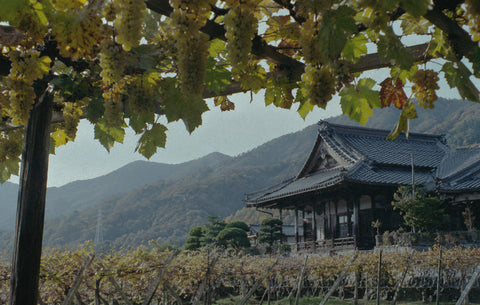
Table of contents
Introduction
At tastings, the question I get most often about Japanese wine isn't about the wine at all.
It's "Wait, Japan makes wine?"
Fair question.
Japan is sake country in most people's minds, and I'm not going to argue with that. This article is about grape wine only. Sake has its own thousand-year story and deserves its own article, so I'm leaving it out on purpose.
Here's what I find odd about Japanese grape wine, and it took me a while to notice it.
The grape got there first.
Koshu was growing in Yamanashi for something like a thousand years before anyone in Japan seriously tried to ferment it.
Then, when a few Meiji-era pioneers finally did, the country didn't want the result.
Dry wine from Koshu failed commercially in the 1880s. The same grape, from the same valley, won Japan's first Decanter Gold in 2014.
That gap is the whole story. It's the history of a country learning to like something it had grown all along.
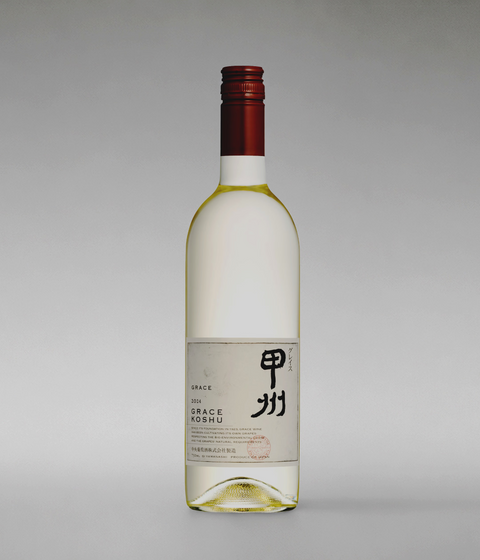
If you'd rather taste a Koshu than read about one, I carry Grace Koshu ($49).
I keep a journal of every bottle we open at home. It's past 500 entries now. Going back through it while researching this, I realized I knew the Japanese wines in it far better than I knew where they came from.
So this is the article I wanted to read myself.
Where the record is thin, I say so.
A Grape Before the Wine
Every history of Japanese wine starts in Katsunuma (勝沼), a valley town in Yamanashi about 90 minutes west of Tokyo by train, and it starts with Koshu.


Two Legends, One Temple
The older legend is set in 718.
A traveling monk named Gyoki (行基) is said to have had a vision of Yakushi Nyorai, the Buddha of medicine, holding a bunch of grapes. He founded Daizenji temple (大善寺) in Katsunuma and planted vines nearby. The temple still stands, and it still keeps a statue of a grape-holding Buddha.
Locals call it the "grape temple."
The second legend is set in 1186.
A local man named Amemiya Kageyu (雨宮勘解由) found an unusual wild vine on his way home from a festival, took it back to his fields, and grew it. Years later it fruited, and the grape spread through the valley from there.
I'm not going to pick one, and I don't think the choice matters much.
Both stories put grapes in Katsunuma long before anyone thought to ferment them. That is the part worth holding onto.
Koshu spent most of its life as something you ate.
Fresh in autumn, dried through the winter, handed up at the temple as an offering. The medicine association from the Gyoki story stuck to it for centuries.
So why did nobody make wine from it?
Japan already had a drink, and it was rice. Sake had the ceremonies, the breweries, the tax revenue, and the habit behind it.
A grape was a fruit.

The main hall of Daizenji in Katsunuma, a National Treasure. Photo by painreef3108, CC BY 3.0, via Wikimedia Commons.
What the DNA Says
You can't check a legend. You can check a grape.
Researchers in Japan sequenced Koshu and found it is about 70 percent Vitis vinifera, the same species as Chardonnay and Cabernet Sauvignon.
The other 30 percent comes from wild East Asian vines, and the maternal line points to Vitis davidii, which still grows wild in China.
Read that backward, and you get a route.
A European wine grape moved east, met a wild Chinese vine somewhere along the way, and the cross ended up in Japan. You don't have to believe a monk's vision to accept it.
How solid is the thousand years?
Not very. Look at the two legends again.
One says 718, and the other says 1186. They are 468 years apart, both are still in circulation, and nobody can rule either out. That gap is the honest measure of what anyone actually knows.
No ship's manifest survives. No planting record. No name for whoever carried the cuttings over.
I have written "a thousand years" twice on this page already, and so does nearly everyone else who writes about Koshu, because there is nothing better to put in its place.
The vine is the only witness, and it doesn't keep a calendar.
If you want the full profile of the grape, how it tastes and how it's grown, I wrote a long guide to Koshu wine already. This article is about what people did with it, and for a very long time the answer was nothing.
Wine Arrives With the Missionaries
Grape wine as a drink reached Japan from the other direction, by ship.
Francis Xavier landed at Kagoshima in August 1549, and the Portuguese Jesuits who followed him brought wine as gifts for the lords of Kyushu.
Wine was part of the Mass, and it was also useful diplomacy.
The Japanese called it chintashu (珍陀酒), which most sources trace to the Portuguese tinto, red.
Some of the daimyo apparently took to it, and it kept arriving on the Portuguese trading ships for the next several decades.
None of it was made in Japan, and none of it lasted.
When the Tokugawa government banned Christianity in the early 1600s and then closed the country, wine went out with the priests.
It was the drink of a forbidden religion.
For the next 250 years, grape wine in Japan more or less disappears from the record.

The Kokura Experiment, 1627
Except for one small, strange episode, and I love this one.
In 2018, researchers at Kumamoto University, going through the Hosokawa family archives, found orders from Hosokawa Tadatoshi, lord of the Kokura domain in northern Kyushu, to have wine made.
The documents run from 1627 to 1630. A retainer named Ueda Taroemon, who had some training in Western techniques, made it from wild mountain grapes, and it was apparently meant as medicine rather than as something to drink at dinner. Then the Hosokawa clan was transferred to Higo, today's Kumamoto, in 1632, the anti-Christian crackdown hardened, and the winemaking stopped.
Three or four vintages, made quietly, for a lord's medicine chest.
Until that discovery, everyone assumed Japanese winemaking began in the 1870s.
It turns out someone tried 250 years earlier and had to quit.
Meiji: Japan Decides to Make Wine
1868 changed the reason for wanting wine at all.
The new Meiji government was trying to industrialize a country in a hurry, and it copied Western industries almost indiscriminately. Railways, brick kilns, silk filatures, wine.
Wine came with an argument the others didn't have: Japan already grew a grape, so the raw material was sitting there.
That is also why it went wrong.
The order came down from officials who wanted an export industry. It did not come up from anybody who actually liked drinking the stuff.
The first attempts were in Kofu, the Yamanashi capital, in the early 1870s.
Two men, a priest named Yamada Hironori and a merchant named Takuma Norihisa, made wine from Koshu and wild grapes using sake-brewing equipment, because that was the equipment Japan had. Sources disagree on the year, 1870 or 1875, and I suspect they tried more than once. Reports on European wine from the returning Iwakura Mission in 1873 gave the idea official backing.
Two Young Men in Champagne
Then, in August 1877, a group of Katsunuma landowners founded Dainihon Yamanashi Budoshu Kaisha (大日本山梨葡萄酒会社), usually called Japan's first private winery.
Almost immediately they did something bold.
They sent two young men to France to learn how wine was actually made.
Takano Masanari (高野正誠) and Tsuchiya Ryuken (土屋龍憲) were both young and, from what I've read, complete novices at wine.
They sailed in October 1877 and spent about a year and a half in Troyes, in the Champagne region, working under a local winemaker and learning viticulture, fermentation and cellar work in a language they were also learning.
They came back in the spring of 1879.
There's a photograph of the two of them in Western suits that I've seen in more than one Japanese account of this story.
Two kids from a mountain valley, standing in a French studio, about to carry an entire industry home in their heads.

A Katsunuma vineyard around 1912, a generation after the first winery closed. Public domain, via Wikimedia Commons.
The Short Life of the First Winery
They made dry white wine from Koshu, the way they had been taught.
Nobody wanted it.
Japanese drinkers of the 1880s had sake and shochu as their reference points, and a dry, acidic white tasted to them like something had gone wrong with it.
The company also had trouble with money and, depending on which account you read, with a typhoon. It was dissolved in 1886, less than a decade after it opened.
The failure was commercial, not technical, and that distinction is the reason any of this survived.
Takano and Tsuchiya could make wine.
What they could not do was sell it.
So they stayed and kept working, and Tsuchiya later went in with a local businessman, Miyazaki Kotaro (宮崎光太郎), whose Miyakoen winery paid farmers across the valley for their fruit instead of growing its own.
That last detail is the one that mattered.
A farmer with half a hectare could now sell grapes to a winery, so vines spread across Katsunuma without anyone needing capital to start.
Château Mercian, one of Japan's largest producers today, traces its lineage back to the 1877 company that went under.
Phylloxera reached the vineyards in the 1880s and killed most of the European vines that had been imported alongside the know-how, which is one reason Koshu, and later a lot of American hybrids, ended up carrying Japanese wine for the next century.
The European grapes would be back, but not for ninety years.
The Sweet Wine Century
If dry wine was the problem, sweet wine was the answer, and for about eighty years it was the only answer.
Kamiya Denbee (神谷傳兵衛) figured it out first.
He opened Japan's first Western-style bar in Asakusa, Tokyo, in 1880, and it's still there, still called Kamiya Bar.
In 1881 he launched Bee Brand Kozan Wine (蜂印香竄葡萄酒), a wine base sweetened with honey and dosed with Chinese medicinal herbs.
It sold as a tonic as much as a drink, and it sold very well.
In 1903 he built Japan's first full-scale winery, the French-style Ushiku Chateau in Ibaraki, north of Tokyo.
The chateau is a museum now.
The bar is still pouring.
Akadama and the Red Sun
The one everyone knows came next.
Torii Shinjiro (鳥井信治郎) opened a small shop in Osaka in 1899 selling imported Spanish wine, and the Spanish wine didn't sell.
So he did what Kamiya had done and reworked it for a Japanese palate.
On April 1, 1907, he released Akadama Port Wine (赤玉ポートワイン), a sweet, red, fortified wine with a red sun on the label. Akadama means "red ball," and the sun was the point. Japan's dawn in a bottle, or that was the pitch.
It worked beyond anything the Meiji pioneers had managed.
A 1922 poster, a model in a dark room with bare shoulders and a glass of Akadama, is generally called Japan's first nude advertising poster. The model was an opera singer named Matsushima Emiko (松島栄美子). It caused a scandal and a sales spike in equal measure, and it went on to take first prize at a poster exhibition in Germany.
Torii used the Akadama money to build Japan's first whisky distillery at Yamazaki in 1923.
His company was called Kotobukiya then.
It renamed itself Suntory in 1963.
Every Suntory whisky you've ever ordered was, at some remove, paid for by sweet red wine.
If the story sounds familiar, that is because Japan has watched it.
NHK's 2014 morning drama Massan (マッサン) tells this stretch of it with the names changed.
Akadama becomes "Taiyo Wine," Torii becomes a merchant called Kamoi, and the poster scandal is in there too. The drama is really about Taketsuru Masataka and Nikka, but the wine that bankrolls everything in the early episodes is this one.
If you grew up in Japan you know the label. It was renamed Akadama Sweet Wine in 1973, after Portugal protected the word "Port," and it's still on sale.
I'm not going to pretend it's a great wine.
But it did something dry Koshu could not do in the 1880s: it taught a whole country that grape wine could be pleasant.
The cost was that "wine" in Japan came to mean sweet, fortified and slightly medicinal for most of the twentieth century.
Producers made what sold.
Serious dry table wine stayed a curiosity, and Koshu, the grape that started everything, spent decades as a cheap blending base and a table grape, and not much more.

Kawakami Zenbei and a Grape Built for Japan
One man was working on a different problem at the same time, and he deserves a few paragraphs here even though I've written a whole article about his grape. (Read it here)
Kawakami Zenbei (川上善兵衛) founded Iwanohara Vineyard in Joetsu, Niigata, in 1890, in some of the deepest snow country in Japan. European grapes died there. Rain rotted them, humidity split them, winter buried them. Instead of importing better vines, he bred his own, and over his lifetime he made more than ten thousand crosses by hand. Cross number 3,986, made in 1927, became Muscat Bailey A, which is now the most planted red wine grape in Japan.
He also built Japan's first snow-cooled cellar in 1898, and in 1934 he went into a joint venture with Torii Shinjiro, the Akadama man, who became co-investor and co-owner of the Iwanohara business. Two years later Kotobukiya planted Kawakami's vines at a new estate in Yamanashi, Tomi no Oka, that Suntory still farms. So the sweet-wine money and the grape-breeding obsession ended up in the same vineyard. The full story, including the snow cellar and the strawberry-candy aroma, is in our Muscat Bailey A guide.

The Postwar Turn
After 1945 the industry rebuilt around the same sweet wines, but a few producers started pointing the other way.
Mercian launched its brand in 1949 and marketed it as a dry wine made entirely from Japanese grapes, which was unusual enough to be the selling point.
In Katsunuma, the Misawa family, who had been making wine under their own name since 1923, launched the Grace label in 1953.
That's the same Grace Wine we carry today, five generations on, and the story of the family is in our Grace Wine article.
Hokkaido got into wine through a town council. Ikeda, in the Tokachi region of eastern Hokkaido, was broke after an earthquake and a run of failed harvests in the 1950s, and its mayor decided the wild grapes growing on the hillsides were the way out.
The town-run winery produced its first Tokachi Wine in 1963, Japan's first municipal wine, made from cold-hardy varieties bred to survive winters of minus 20°C (about minus 4°F).
The town built itself a wine castle.
It's still running, and still owned by the town.
The Seven Wine Booms
Japanese drinkers found wine in waves, and the trade has a slightly comic habit of numbering them.
Ask three people in the business how many wine booms Japan has had and you will get three answers.
Seven is the common one.
Not much moved until Tokyo hosted the 1964 Olympics and Osaka the 1970 Expo, which is when a lot of people ate Western food for the first time.
The booms proper arrived in 1972, 1978 and 1981. All three ran on the same two things, more money in people's pockets and cheaper bottles on the shelf, and all three faded.
Two of them changed something.
In the late 1980s Beaujolais Nouveau became a national November event, helped by an accident of geography, because Japan sits far enough east to open the bottles hours before Paris does.
That one stuck, and it is still a fixture.
Then in 1997 and 1998 came the big one, when television reports on red wine polyphenols and heart health set off a genuine craze.
Consumption jumped, importers couldn't keep up, and the whole thing collapsed. The market took until about 2005 to recover.
The seventh, if you count it, started around 2012 with cheap and reliable Chilean wine arriving under a new trade deal.
By 2015 Chile had passed France as Japan's biggest source by volume.
Notice what's missing from all of that.
Almost all of it was imported wine.
The booms grew Japan's appetite, and Japanese producers spent most of that period bottling imported bulk wine and concentrate under Japanese labels to meet it, which was legal and, until 2018, barely disclosed.
The domestic grape story was happening in the background, in Nagano and Katsunuma, and it was quieter.
The Quality Turn
The turn has two dates, one for red and one for white, and both belong to Mercian.
In 1976 Mercian planted Merlot with contract growers at Kikyogahara (桔梗ヶ原), a high plateau in Shiojiri, Nagano.
Everyone since the Meiji era had said European wine grapes could not ripen properly in Japan's wet summers.
It took ten years to prove otherwise.
The 1985 Kikyogahara Merlot, released in 1989, won a Grand Gold at the international competition in Ljubljana, then one of the big judging events in the wine world, and that medal is the one Japanese winemakers still point to as the moment the old theory died.
Nagano is now Japan's second-largest wine region, and Merlot is its grape.

The white date is 1983.
That year Mercian's Katsunuma winery tried making Koshu sur lie, leaving the finished wine on its yeast lees for months the way Muscadet producers do in the Loire.
Koshu is a delicate, low-aroma grape, and the lees gave it texture and a savory depth it had never had.
It was dry, it was clean, and for the first time it tasted like a wine somebody had chosen to make rather than settled for.
Mercian shared the method with the other Katsunuma producers instead of keeping it, which still strikes me as generous, and Koshu sur lie became the template for the modern dry style.
From there the pace picks up.
Grace put a Katsunuma origin certification on a bottle in 1983, decades before Japan had an official GI system, and in 1992 started trellis trials to get Koshu off the traditional overhead pergola.
In 1998, at Japan's first international wine competition, a barrel-fermented Grace Koshu was named the country's best white.
That same year Mercian brought in Paul Pontallier, the chief winemaker of Château Margaux, as an adviser on its reds, and in the early 2000s the Bordeaux professor Denis Dubourdieu started working with Katsunuma producers on Koshu.
Japanese wine had begun asking Bordeaux for notes.
And in 1995 a Japanese sommelier, Tasaki Shinya, won the world's best sommelier title, in Tokyo.
That says nothing about Japanese wine directly. It says a lot about how seriously Japan was taking wine by then.
Koshu Goes Abroad
The next move was to leave the country, and it was mostly a Koshu move.
In 2000 the Financial Times wrote about Grace Koshu and the World Atlas of Wine included it, which is roughly when the wider wine world noticed Japan had a native grape.
In 2008 Grace exported the first Koshu to the EU.
In 2009 a group of Yamanashi producers formed Koshu of Japan (KOJ), a trade body with one goal: get Koshu onto London wine lists.
They picked London because British sommeliers at Japanese restaurants were already asking what to pour with the food.
One problem.
Under EU rules you can't put a grape variety on a label unless the variety is registered with the OIV, the International Organisation of Vine and Wine.
Koshu wasn't.
A wine that said "Koshu" on the front couldn't be sold in Europe as Koshu.
KOJ, with Grace's Ayana Misawa among those pushing hardest, got Koshu registered in 2010.
Muscat Bailey A followed in 2013.
For the first time, Japan's two native grapes could be named on a bottle anywhere in the world.
Then the medals started. In 2013 Grace's Gris de Koshu took a Gold at the Decanter Asia Wine Awards, the first for a Japanese wine there.
In 2014 the Cuvée Misawa Akeno Koshu 2013 won a Gold and a Regional Trophy at the Decanter World Wine Awards in London, the first Gold Japan had ever won at the world's largest wine competition.
Grace Koshu went Platinum in 2015 and 2016, and Grace Extra Brut became the first Asian sparkling wine to take a Decanter Platinum in 2016.
The full run is in the Grace article, but the point here is simpler.
A dry Koshu from Katsunuma, the wine no one would buy in 1880, was now winning at the top table.

Defining "Japan Wine"
All of that success exposed a problem at home.
Until very recently, "domestic wine" (国産ワイン) in Japan meant wine bottled in Japan.
The grapes could come from anywhere.
A great deal of it was imported bulk wine or grape concentrate from Chile, Argentina or Spain, blended and bottled in Japan and sold under a Japanese label.
There was no law against it and almost no requirement to say so.
If you bought a Japanese-labeled wine in 2010, you might have been drinking very little Japan.
The National Tax Agency, which regulates alcohol in Japan, finally wrote rules in 2015, and they took effect on October 30, 2018.
They created a protected term, 日本ワイン, "Japan wine," and it means one thing: wine made in Japan from 100 percent Japanese-grown grapes.
Anything else must now say on the label that it was made from imported wine or imported must.
A place name on the label requires at least 85 percent of the grapes from that place, and a grape variety on the label requires at least 85 percent of that variety.
Alongside it came a proper Geographical Indication system.
GI Yamanashi was the first, in 2013. GI Hokkaido followed in 2018, and Nagano, Yamagata and Osaka were all designated on the same day, June 30, 2021.
Five regions so far.

The back label of the Grace Koshu we carry. This is the US export label, so it is in English, but it still names the Yamanashi GI and the Katsunuma hills the fruit came from.
How to Read a Label
Practically, if you're standing in a shop in Japan or scrolling an importer's list, this is what the history leaves you with.
- 日本ワイン on the label means 100 percent Japanese grapes. No exceptions.
- 国産ワイン or "domestic wine" without those characters can be anything, including bulk imports bottled in Japan.
- A prefecture name (Yamanashi, Nagano, Hokkaido) now guarantees 85 percent of the fruit is from there.
- A grape name (Koshu, Muscat Bailey A, Merlot) guarantees 85 percent of that grape.
- GI Yamanashi, GI Hokkaido and the other three are a step up again, with their own rules on permitted varieties and minimum ripeness.
Both Grace wines we carry are Japan wine by that definition, grown and made in Yamanashi. Our Kazumi Koshu is not, and doesn't claim to be. It's Koshu grown in Napa Valley by a Japanese-American winemaker, which is a different story and, I'd argue, the next chapter of this one.
Japanese Wine Today
The Numbers
Japan had 238 wineries in 2008.
It had 493 in 2023, 519 in 2024, and the count for 2025 came in around 550.
That's more than double in seventeen years, and most of the new ones are tiny. One family, a few hectares, a converted barn.
Volume is another matter.
Japan wine, the 100 percent domestic kind, came to about 13,700 kiloliters in 2024, roughly 18 million bottles.
Japan drinks something like 350,000 kiloliters of wine a year, so the home-grown share is a few percent, about one bottle in twenty-five.
Imports fill the rest, and always have.
Japanese wine is a small, expensive, hand-made corner of a large import market, which is exactly why the bottles that make it to the US tend to be the good ones.
Where it's made has shifted.
Yamanashi is still the biggest, with about 28 percent of Japan wine in 2024, but Nagano is close behind at 22 percent and Hokkaido has 16 and is climbing fastest.
What's planted has shifted as well.
In 2017 the leading wine grapes were Koshu at 17 percent and Muscat Bailey A at 14, followed by the American table-grape hybrids Niagara, Concord and Delaware that fed the sweet wine era.
Those hybrids are now in steep decline. Chardonnay and Merlot are up, Sauvignon Blanc is up, and Pinot Noir volumes jumped by more than 300 tonnes in a single year, most of it in Hokkaido.
Exports are still tiny, 172 kiloliters in 2024, roughly 230,000 bottles, but that was up 43 percent on the year before, and shipments to the United States more than doubled.
Some of those are the bottles headed our way.

North to Hokkaido
The most interesting thing in Japanese wine right now is happening at the top of the map.
Hokkaido was always too cold for the classic grapes, which is why Ikeda bred its own in the 1960s.
Then two things changed.
Pinot Noir seedlings were handed out to farmers around Yoichi, on the west coast, in 1982, and a few of them took.
And the climate warmed.
Yamanashi summers are getting harder on grapes at the same time as Hokkaido's are getting kinder.
Takahiko Soga founded Domaine Takahiko in Yoichi in 2010, on a few hectares, making almost nothing but Pinot Noir.
In 2020 his Nana-Tsu-Mori became the first Japanese wine on the list at Noma in Copenhagen, and his bottles are now allocated, resold and argued over the way Burgundy is.
Then Burgundy itself arrived.
Étienne de Montille, of the Volnay estate Domaine de Montille, spent years scouting Japan and in 2017 planted vines outside Hakodate in southern Hokkaido, openly as a hedge against a warming Burgundy.
It was the first serious foreign investment in Japanese wine, and I doubt it will be the last.
And every few years the ground produces a surprise, like a previously unknown grape found growing behind a house in Fujisawa in 2019.
That one is called Maeve, and I wrote about it here.

Where Japanese Wine Co. Fits
We are a small and very recent footnote to all this.
Japanese Wine Co. is the newest brand in the Dream of Japan family, launched in 2026 alongside our long-running tea and coffee businesses, and it exists because of one bottle.
In 2021 my partner Miki wanted to try Grace Koshu after hearing it had won a Decanter Platinum. You couldn't buy it in the United States, so she ordered a bottle from Selfridges in London, where she used to shop when she lived in the UK, and had it shipped over. It was the first Japanese wine that made both of us stop talking and pay attention. Five years and a great deal of paperwork later, we became the first place in the US where you can buy Grace Wine online.
So the two Grace bottles we carry are, to me, the end of this history in a glass.
Grace Koshu is the dry, steel-fermented Koshu that Takano and Tsuchiya were trying to make in 1879 and that Japan finally learned to love a century later.
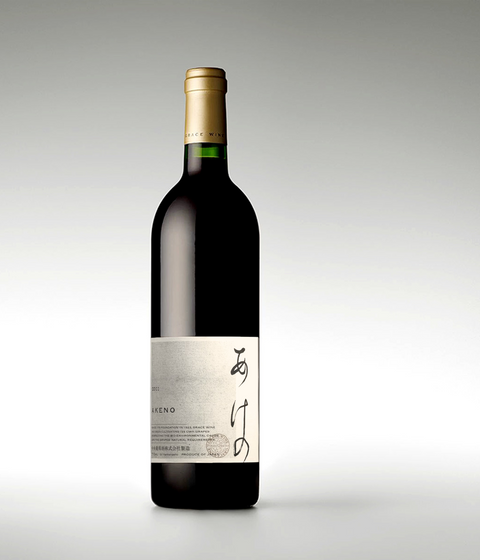
Akeno is a Merlot-led red from a vineyard at 700 meters (about 2,300 feet) that nobody would have believed possible before that 1989 medal.
And Kazumi Napa Valley Koshu, grown from canes Kazumi bought from UC Davis, is the grape leaving Japan the way it once arrived, and coming back as something new.
Quick Reference: Japanese Wine Timeline
| Year | What happened |
|---|---|
| 718 | Legend: the monk Gyoki founds Daizenji in Katsunuma and plants grapes |
| 1186 | Legend: Amemiya Kageyu plants a wild vine he found near Katsunuma, the Koshu grape |
| 1549 | Francis Xavier lands at Kagoshima; Portuguese wine (chintashu) arrives as gifts |
| 1627 to 1630 | Hosokawa Tadatoshi has wine made in Kokura for medicine; Japan's earliest recorded winemaking |
| Early 1870s | Yamada Hironori and Takuma Norihisa make wine in Kofu with sake equipment |
| 1877 | Dainihon Yamanashi Budoshu founded in Katsunuma; Takano and Tsuchiya sent to Champagne |
| 1881 | Kamiya Denbee launches sweet Bee Brand Kozan Wine |
| 1886 | Japan's first winery dissolved; the know-how stays in Katsunuma |
| 1890 | Kawakami Zenbei founds Iwanohara Vineyard in Niigata |
| 1903 | Ushiku Chateau, Japan's first full-scale winery, built in Ibaraki |
| 1907 | Torii Shinjiro launches Akadama Port Wine |
| 1923 | Misawa family (later Grace Wine) begins in Katsunuma; Yamazaki whisky distillery built on Akadama profits |
| 1927 | Kawakami breeds Muscat Bailey A |
| 1949 | Mercian brand launched, marketed as dry wine from Japanese grapes |
| 1953 | Grace label launched |
| 1963 | Tokachi Wine, Japan's first municipal wine, Ikeda, Hokkaido |
| 1972 | First "wine boom" |
| 1976 | Mercian plants Merlot at Kikyogahara, Nagano |
| 1983 | Mercian's first Koshu sur lie; the modern dry Koshu style begins |
| 1989 | 1985 Kikyogahara Merlot wins Grand Gold in Ljubljana |
| 1997 to 1998 | Red wine (polyphenol) boom |
| 2009 | Koshu of Japan formed; London campaign begins |
| 2010 | Koshu registered with the OIV |
| 2013 | GI Yamanashi, Japan's first wine GI; Muscat Bailey A registered with the OIV |
| 2014 | Grace wins Japan's first Decanter World Wine Awards Gold |
| 2017 | Domaine de Montille plants in Hakodate, Hokkaido |
| 2018 | "Japan wine" (日本ワイン) labeling rule takes effect, October 30; GI Hokkaido |
| 2021 | GI Nagano, Yamagata and Osaka designated |
| 2025 | Around 550 wineries in Japan, up from 238 in 2008 |
Conclusion
The thing I keep coming back to is how long the country said no.
Japan had a wine grape for a thousand years and didn't make wine.
It had two trained winemakers in 1879 and didn't buy their wine.
It spent the twentieth century drinking sweet Akadama and imported Beaujolais while Koshu sat in the background as a table grape.
Then, in the space of about thirty years, from Mercian's sur lie experiment in 1983 to Grace's Decanter Gold in 2014, it turned into a wine country with a native grape, a legal definition, five GIs and a Burgundy house planting Pinot Noir in Hokkaido.
A 150-year overnight success.
That's how I'd describe it.
If you want to taste the history rather than read it, start with a Koshu.
Any good one, ours or someone else's.
Look for 日本ワイン on the label, and think about the two young men in Troyes who were making something very close to it in 1879, for a country that wasn't ready.

Any questions about Japanese wine, or about anything we carry, please don't hesitate to reach out to us. We love talking about this stuff.
Thanks for reading. And here's to the country that took its time.
Related products


Subscribe to the Japanese Wine Club
Sign up for free to the Japanese Wine Club to get advice, exclusive articles, tips, and special offers.

About the author

Subscribe to the Japanese Wine Club
Sign up for free to the Japanese Wine Club to get advice, exclusive articles, tips, and special offers.
Comments (0)
There are no comments for this article. Be the first one to leave a message!