

Everything You Need to Know About Grace Wine Japan
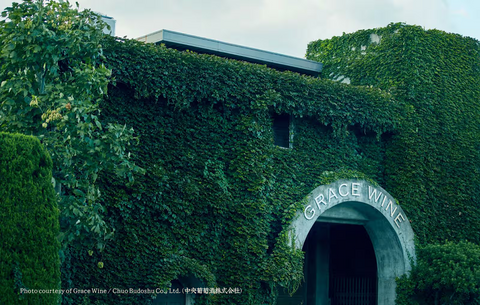
Table of Contents
Introduction
Miki heard about Grace Koshu, a small winery up in Yamanashi (山梨) that had won a Decanter Platinum.
Back in the year 2021, we wanted to taste it, but you couldn't buy it in the United States.
Japanese wine just wasn't on shelves here — you might find a bottle in a handful of restaurants in Tokyo, maybe London, but not in any US shop.
So Miki ordered one from Selfridges, the London department store she used to shop at when she was living in the UK, and had it shipped to us. That was supposed to be a big deal in the wine world. We wanted to taste what people were so excited about.
It was good. Honestly, more than good — it was the first Japanese wine that made us sit down and actually pay attention.
Citrus on the nose, then mandarin and white peach as you got past the first sip, with a real mineral edge underneath.
The kind of finish that lingers without being heavy. We finished the bottle and just thought, okay, this is real.
That bottle is a big part of why we now carry Grace Koshu at Japanese Wine Co., side by side with our Kazumi Napa Valley Koshu. The bridge that made it possible for us to carry Grace officially in the US was Michelle Sakazaki of Kazumi Wines — she made the introduction that finally opened the door for us. We're now the first (and only) place where you can buy Grace Wine online in the United States. Two Koshus — one from Yamanashi, one from California — and tasting them together is the cleanest lesson we know on what Japanese wine actually is right now.
This is everything we've learned about Grace Wine Japan since that first UK-imported bottle.


A Hundred-Year Family in Yamanashi
Grace Wine is technically Chuo Budoshu Co., Ltd. (中央葡萄酒) — but most people, even in Japan, just call it Grace.
The story starts in 1923, when Chotaro Misawa (三澤長太郎) founded the company in Katsunuma (勝沼), a small town in Yamanashi Prefecture about two hours west of Tokyo. He started selling wines under his own name shortly after.
1953 — The Grace Name Arrives
The Grace name itself didn't appear until 1953. That's when Chotaro's grandson, Kazuo Misawa (三澤一雄), took over. Kazuo had spent some time in banking before joining the family company, and he had bigger ambitions for what Japanese wine could be. He launched the Grace label in 1957. He started exporting wines to the French Navy in 1973 (one of those small footnotes that sounds made up but isn't). And in 1983, he produced Japan's first wine with an official Geographical Indication — Katsunuma — laying the legal groundwork for everything Yamanashi has done since.
1989 — Shigekazu and the Misawa Vineyard
By 1989, Kazuo's son Shigekazu Misawa (三澤茂計) had taken over as president (4th generation). He launched the higher-end Cuvée Misawa line, which would later become the platform for Grace's biggest international wins. Then in 2002, he made what is probably the most consequential single decision of the modern era of Grace: he established the Misawa Vineyard in Akeno (明野), planting on land at 700 meters (~2,300 feet) elevation with clayey volcanic ash soil.
That vineyard now produces both the higher-end Cuvée Misawa Koshu and the red wine they call Akeno — the second bottle we carry alongside Grace Koshu. Shigekazu received the Order of the Rising Sun in 2019 for his contributions to Japanese viticulture. So that gives you a sense of the standing.
2008 — Ayana Misawa, the Fifth Generation
And then in 2008, the fifth generation arrived. Ayana Misawa (三澤彩奈), Shigekazu's daughter, became Head of Viticulture and Oenology at 28 years old. She was the first woman to lead the century-old estate. She was also the first Misawa generation with formal Western wine training — she'd studied at the University of Bordeaux in France and at Stellenbosch University in South Africa before coming home.
Six years after her arrival, in 2014, Grace won Japan's first-ever Gold medal at the Decanter World Wine Awards. The wine was the 2013 Cuvée Misawa Akeno Koshu, made from her vineyard. There's more on that whole award arc in a section below — but if you want one fact that explains why Ayana's role matters, that's it.
2023 was the company's 100th anniversary. They're now selling wine in their seventh decade as Grace, fifth generation deep, and somehow still small enough that the family is hands-on with what goes in the bottle.

Yamanashi: Where Grace Farms
If you've read our piece on Koshu wine, you already know that Yamanashi is the heart of Japanese viticulture. (If you haven't read it, that article goes deep on the climate, the soils, and the grape itself — worth a read if this section makes you curious.)
Here, I want to focus specifically on where Grace farms, because the choice of vineyard has a lot to do with how their wines actually taste in the glass.
Grace works two main areas in Yamanashi.

Katsunuma — The Original Valley
This is where the company started in 1923. Most of the older Yamanashi wineries are clustered here, and the Grace Koshu we carry is made entirely from Katsunuma fruit.
Katsunuma sits in a basin in the Yamanashi mountains, with hot summers, cool nights, and granitic soils that drain quickly. The Koshu vines here are old. Some are over 100 years old, which by Japanese standards is essentially the upper limit. They mostly grow on the traditional pergola system — those overhead trellises you see in Japanese vineyard photos — which makes sense in a basin climate where you want a canopy keeping the grapes from baking.
One detail that's worth dwelling on: each grape bunch in Katsunuma gets its own little umbrella during harvest season. That's not a metaphor — they're actual paper umbrellas, hand-tied over each cluster, to protect the fruit from autumn rain. Imagine doing that on 8 hectares of vines and tell me about your weekend plans. It's the kind of effort that doesn't really make economic sense unless you're committed to letting Koshu hang on the vine until it's actually ripe.
Akeno — The Misawa Vineyard at 700 Meters (~2,300 ft)
Established by Shigekazu in 2002, Misawa Vineyard sits in the village of Akeno, in the Hokuto region of Yamanashi (north of Katsunuma). The vineyard is at 700 meters (~2,300 feet) elevation — about twice the altitude of most Yamanashi sites — and the soil is a clayey volcanic ash. Very different from Katsunuma's granite. The climate up there is colder and more diurnal, with bigger swings between day and night.
This is the vineyard that changed everything for Grace's red-wine ambitions, because Akeno's altitude and soil happen to suit Bordeaux varieties — Merlot, Cabernet Sauvignon, Petit Verdot — much better than the warmer valley below. The Akeno red we carry comes entirely from this site. So does the higher-end Cuvée Misawa Koshu, which mostly sells out before Western markets even see it.
If you want one fact that explains why Grace makes interesting reds while most other Japanese producers don't: it's those 700 meters (~2,300 feet) of elevation in Akeno. That altitude lets Bordeaux grapes ripen slowly without losing acidity, then build complexity rather than just getting fat in heat. Most Japanese vineyards sit at 200 to 400 meters (~650 to 1,300 feet) and end up muddled by the rainy season. Akeno is a different world.
What Makes Grace's Winemaking Distinctive
From what's been written about Grace and what shows up in tasting, a few things stand out in how they work.
Indigenous Yeasts
Grace was the first winery in Japan to ferment using yeasts isolated from their own vineyards rather than commercial cultures. It's a slower, less predictable approach. It's also part of why their wines have a more place-specific character than a lot of Japanese wines that read more "international" because they're using cultivated yeasts. The wine ferments to a particular profile because the yeasts are particular to that vineyard. That's the theory, anyway, and the bottles seem to back it up.
Massal Selection (Their Own Vines)
Grace propagates their own Koshu vines from cuttings of older, well-performing plants in their own vineyards. Most Japanese producers buy in clonal material from a nursery. Grace grows from what's already worked on their land, which builds genetic diversity over time. This is the kind of thing that doesn't show up in your first sip but probably accounts for some of the consistency people talk about across vintages.
Hand Harvest, Multiple Passes
Every bunch picked by hand. Multiple passes through the vineyard during harvest, taking the bunches that are ready and leaving the rest for next time. It's labor-intensive in a way that most volume-focused producers can't justify. Grace can justify it because they're not chasing volume. They're chasing what each bunch is supposed to taste like at peak.
The VSP Trials
Vertical shoot positioning — the modern trellis system you see in most contemporary vineyards globally — is genuinely hard in Japan because of the rain and humidity. Grace started experimenting with VSP all the way back in 1992, way before anyone else in Yamanashi was taking it seriously. Today they use a mix: traditional pergola for old-vine Koshu in Katsunuma, VSP for the Bordeaux varieties at Akeno. Right tool for the right grape, basically.
The Two Bottles We Carry at Japanese Wine Co.
This is the part where, if you're trying to decide what to actually buy, slow down and read carefully. We carry two Grace wines:
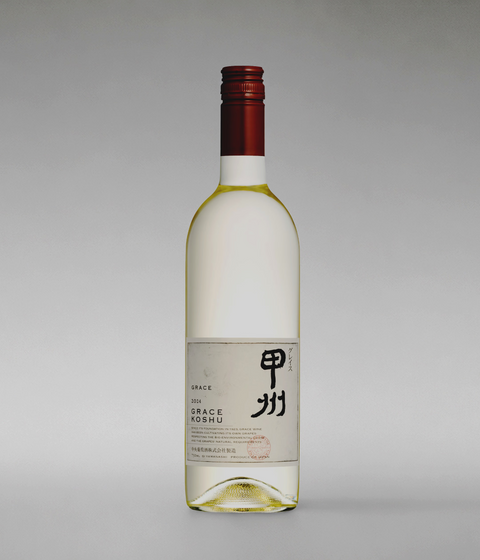
Grace Koshu

The flagship Koshu in Grace's range, made entirely in Katsunuma. Stainless-steel fermented and matured. Bone-dry. About as direct an expression of the Koshu grape as you'll find — no oak influence, no other interventions to muddy the fruit.
What you'll smell: white florals first, then citrus (mandarin orange, sometimes a faint yuzu note), with apple and white peach lurking just behind. There's a beeswax thing that develops the longer the bottle is open. After 30 minutes it almost reads like honey, but quieter.
What you'll taste: light-bodied but not thin. The acidity is clean, almost saline. There's a subtle umami round-out on the mid-palate that I always struggle to describe — it's not quite sweetness, but it's not pure mineral either. The closest comparison I can come up with is really good clear dashi. Then a finish that's drier than you'd expect, with a faint flinty bitterness. That last note is part of why this wine pairs so well with food.
Awards: Decanter World Wine Awards Platinum for the 2015 and 2016 vintages. Decanter Gold for 2014, 2017, and 2018. To put that in context: Decanter Platinum is the top of the awards pyramid. Fewer than 1% of wines that enter come back with one. Grace got Platinum back-to-back vintages. Fewer than a handful of producers in the world manage that.
If you've never had Koshu, this is the bottle to start with. We sell it for $65.
Grace Koshu — Decanter Platinum White Wine
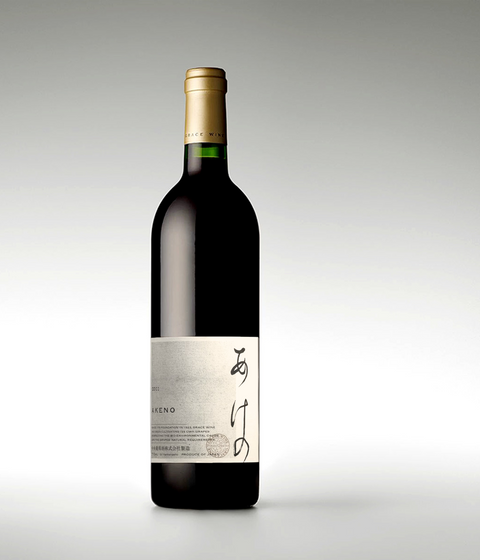
Akeno (Japanese Red Wine)

This one always surprises people. They don't expect Japan to make a serious red, and certainly not one made in the Bordeaux mold. Akeno is exactly that.
The blend is Merlot 58%, Cabernet Sauvignon 39%, Petit Verdot 3%. All grown at Misawa Vineyard at 700 meters (~2,300 feet) in Akeno, Yamanashi. Aged 18 months in French oak barrels. Bottled unfined and unfiltered.
What you'll smell: dark plum, black cherry, a touch of cedar from the oak, dried herbs (almost sage), and something faintly volcanic underneath. Mineral, smoky, hard to place until you've had it a few times. It's not the explosive Napa-style nose. Quieter, more layered, more European in feel.
What you'll taste: medium-bodied, with integrated tannins and real depth. The Merlot dominance gives it a velvety mid-palate. The Cabernet Sauvignon adds structure on the back end. The Petit Verdot is just there to give it that final layer of color and a hint of tightness — only 3% of the blend, but you feel it on the finish.
Pairing-wise, Akeno is one of the most flexible reds I've poured. It works with grilled meats, obviously. But it also works with mushroom-heavy Japanese dishes, with eel kabayaki (because the umami in the wine echoes the umami in the eel), with miso-marinated black cod, with Korean BBQ. It's a bridge wine — a red that happens to make sense alongside food categories where reds usually don't.
For $65, it's also one of the most differentiated Japanese reds you can buy in the US right now. There isn't really a category competitor.
Akeno — Japanese Red Wine from Grace Wine
The Decanter Years
You'll see "Decanter Platinum" mentioned a lot in Grace coverage — including on our own product pages. Worth pausing on what that actually means.
The Decanter World Wine Awards (DWWA) is one of the two or three most respected international wine competitions in the world. Roughly 18,000 wines enter every year. Of those, fewer than 1% come back with Platinum medals, which is essentially a "best in style" call from the panel. It's not a participation award — it's a panel of Masters of Wine and senior critics tasting blind, in multiple flights, over multiple rounds.
Here's Grace's run, year by year:
- 2013: 2012 Gris de Koshu wins Asian Gold at the Decanter Asia Wine Awards. Grace's first major Decanter recognition.
- 2014: 2013 Cuvée Misawa Akeno Koshu wins Japan's first-ever Gold medal at the Decanter World Wine Awards. This is the headline event.
- 2015: Grace Koshu (the bottle we sell) wins Platinum.
- 2016: Grace Koshu wins Platinum again. Also: Grace Extra Brut becomes the first Asian sparkling wine to win Decanter Platinum.
- 2017–2019: Continued Gold and Platinum recognition. Six consecutive years of major Decanter wins.
To frame that arc: before 2013, Japanese wine was essentially invisible at international competitions. Almost no one was looking. Grace's wins are a big part of why you can now read serious wine writing about Yamanashi at all — the awards forced the conversation.
Ayana Misawa: The Fifth Generation

I want to spend a little more time on Ayana, because most English-language coverage skips over what she's actually done — and the story is the kind of thing that matters whether you care about wine or not.
Ayana joined Grace in 2008 as Head of Viticulture and Oenology, at 28. She had just come back from training in Europe and South Africa: a degree from the University of Bordeaux (which is, by reputation, the best winemaking program on the planet), then field experience at Stellenbosch University's wine program in South Africa.
Coming home to take over a fifth-generation family winery isn't unusual in Japan. Coming home with that level of formal Western training, in 2008, and being a woman — that was unusual. She was the first woman to lead the company in its (then) 85-year history. Today, more women are leading Japanese wineries, but in 2008, there weren't many examples to follow.
Under Ayana, indigenous yeasts moved from experiment to standard practice. The higher-elevation Akeno vineyard got more investment, and the Cuvée Misawa range expanded. She was a big part of the advocacy that got Koshu officially registered as a grape variety with the OIV (the international body for grape registration) in 2010 — the first time the grape had received that formal global standing. The international outreach work that put Grace into Decanter, into UK and EU markets, onto Bloomberg's "Top 10 wines" list (the 2014 Blanc de Blancs, in 2019), and into the Guardian's post-Brexit picks (Kayagatake Koshu, 2017) — that's mostly her era too.
And in 2014, six years after she became head of viticulture, the wine she had helped grow won Japan's first Decanter Gold. You don't get a more textbook case of "the fifth generation exceeded the fourth" than that, honestly.
Grace vs. Kazumi — Two Koshus, One Story
If you've read our Koshu article, you know we also carry the Kazumi Napa Valley Koshu — Koshu grown in California by a winery founded by Michelle Sakazaki. Same grape, very different country.
People ask us which is better, and the honest answer is they're different wines for different moods.
Grace Koshu is the Yamanashi tradition. Slightly more reserved, more flinty, with that umami quality that comes from old vines and Yamanashi granite. It's the bottle to drink with sashimi or shabu-shabu — Japanese food on Japanese wine.
Kazumi Napa Valley Koshu is what happens when the same grape gets planted in California. More fruit-forward (kumquat, beeswax, more tropical aromatics). Slightly riper. Different soil signature — more saline-mineral, less granitic.
The fun is tasting them side by side. Buy a bottle of each. Pour about 30 ml (~1 fl oz) of each into two glasses. The difference is real and it's immediate, even to people who don't normally pay attention to wine. If you're hosting friends who haven't done much Japanese wine before, this is the move I'd recommend: pour Koshu against itself, country versus country, and watch their faces.
How to Drink Grace at Home

Pairing-wise, here's how I think about it.
Grace Koshu Pairings
- Sushi (寿司) and sashimi. The default. The acidity and the umami round out raw fish almost perfectly. Try it with white-fleshed fish first — bream, snapper, sea bass.
- Tempura. Cuts through the oil better than most whites, because of that saline finish.
- Shabu-shabu (しゃぶしゃぶ). The light, clear broth and the wine are basically having a conversation about umami.
- Raw oysters. Especially West Coast oysters with their saline sweetness.
- Goat cheese, especially fresh chèvre. The acidity matches.
- A summer afternoon by itself. It doesn't demand food. It's also genuinely refreshing in the way that only wines with this acidity profile can be.
Akeno Pairings
- Grilled meats. Steak, lamb chops, duck breast. Standard Bordeaux-style red pairings work.
- Eel kabayaki (鰻の蒲焼き). The umami match here is genuinely uncanny. Try it once and you'll get it.
- Mushroom-heavy dishes. Mushroom risotto, mushroom-stuffed pasta, beef-and-mushroom stir fries. The volcanic mineral note in Akeno loves earthiness.
- Miso-marinated black cod. The wine's structure cuts through the dense, sweet-savory marinade.
- Korean BBQ. Bulgogi or galbi specifically. The Petit Verdot's tightness on the finish handles sweet-spicy marinades better than most reds.
- Aged hard cheeses. Parmigiano-Reggiano, aged Manchego, mature Comté. Akeno's tannin frame likes salt and protein.
One thing not to do: don't drink Akeno too cold. It needs to come out of the fridge for at least 30 minutes, ideally an hour. At cellar temperature (62–65°F / 17–18°C), it opens up properly and the volcanic-mineral note really shows. Right out of the wine fridge it's locked down.
Why We Carry Grace at Japanese Wine Co.
Coming back to where this started: that bottle Miki shipped from Selfridges in London changed how we thought about Japanese wine. Before that, we'd assumed it was a curiosity — something you'd drink because you happened to be in a Japanese restaurant in Tokyo, not because the wine itself was at world standard. After that bottle, we knew that wasn't right.
Grace is the proof point. They've spent a hundred years building a Yamanashi winemaking standard that survives blind tastings against the best whites in the world. Ayana is making sure the next generation of bottles only gets better. The Akeno red is showing that Japanese wine isn't just about Koshu — there's a whole category of Bordeaux-style reds at altitude that the world hasn't really discovered yet.
We carry both bottles because we want you to be able to taste this without having to do what we did — wait for a bottle to ship across the Atlantic. The Grace Koshu is the cleanest possible introduction. The Akeno is for when you're ready to be surprised.
If you've made it this far, my recommendation: try the Koshu first, with sushi or shabu-shabu, ideally with friends who haven't had Japanese wine before. Their reactions will tell you most of what I've been trying to tell you.
And then, when you're ready, come back for the Akeno. It's a different conversation entirely.
Related products
About the author

Subscribe to the Japanese Wine Club
Sign up for free to the Japanese Wine Club to get advice, exclusive articles, tips, and special offers.

Comments (0)
There are no comments for this article. Be the first one to leave a message!