

Everything You Need to Know About Koshu Wine
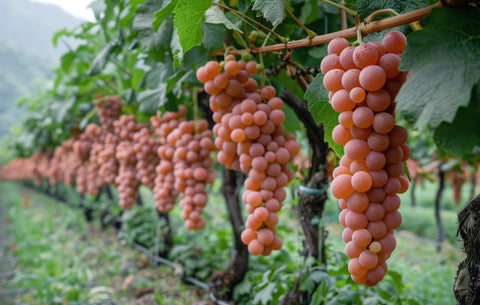
Table of Contents
Introduction
I'll be honest — I'm more of a red wine person. Always have been. So when someone suggested I try Koshu, Japan's signature white wine, I wasn't exactly rushing to the glass.
But I'm really glad I did.
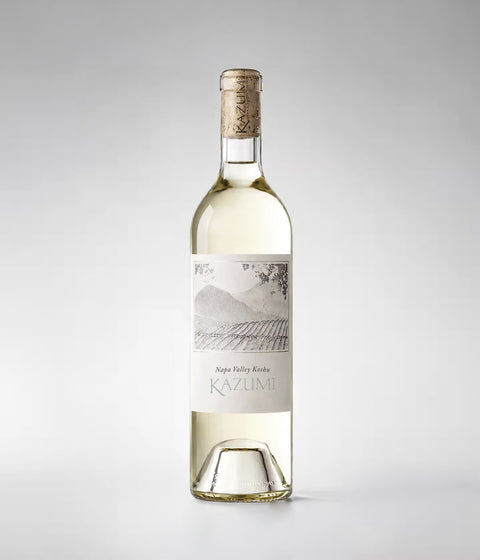
My first proper introduction to Koshu came at Eigikutei (栄菊亭), a beautiful Kaiseki restaurant in Little Tokyo, Los Angeles — one of our favorite spots for authentic Japanese dining. Miki and I went for their shabu-shabu and sushi set, and Morishita-san, who runs the restaurant, was warm and welcoming. It was there that we tried Kazumi Wines' Napa Valley Koshu for the very first time — and it genuinely surprised me.
Kazumi is the first and only winery in the United States to grow and produce Koshu, founded by Michelle Sakazaki in Napa Valley. Trying an ancient Japanese grape, grown in California, served at a Japanese kaiseki counter in Little Tokyo — it felt like a perfect circle.
Miki loved it immediately. For me, it took that first sip with food. But once it clicked, it really clicked. And honestly, pairing it with sushi and shabu-shabu is probably the best possible way to try Koshu for the first time.
If you're curious about what makes Koshu special — and why we think it's one of the most exciting wines in the world right now — this guide is for you.
We're also thrilled to share that we now carry wines from both Kazumi Wines and Grace Wine at Japanese Wine Co. — a Napa Valley Koshu and a Yamanashi Koshu, side by side. More on both of them below!
A small note: just around the corner from Eigikutei, at the Miyako Hotel on the same block, you'll find Okayama Kobo DTLA — the beloved Japanese bakery where our Yokohama Peach is served, right beneath the iconic Shohei Ohtani mural. If you're ever in Little Tokyo, having lunch at Eigikutei and then stopping at Okayama Kobo for dessert and some bread to take home (omochikaeri — おもちかえり!) makes for a really lovely date route. We love that neighborhood.


Kazumi Napa Valley Koshu
What is Koshu Wine?
Koshu wine is Japan's signature white wine — and if you've never tried it, it's quite different from most whites you've probably had before.
It's made from the Koshu grape (甲州), a pink-skinned variety grown mainly in Yamanashi Prefecture (山梨県), nestled in the mountains near Mount Fuji.
Despite having pink skins, it's almost always made as a white wine — the skins are removed early, so the color ends up very pale, almost transparent.
Color, Body & Key Characteristics
Here's a quick snapshot of what Koshu wine typically looks like:
- Color: Very pale straw, almost clear
- Body: Light
- Alcohol: Usually 10–12% (Kazumi Wine is 12%)
- Acidity: Medium to high
- Tannins: Almost none
It's a delicate, elegant wine. If you're used to big, bold whites like oaked Chardonnay, Koshu is going to feel quite different — in the best possible way.
Flavor & Aroma Profile
Koshu is known for subtle, refined aromas rather than big, punchy flavors. Think:
- Citrus — yuzu, lemon, grapefruit
- White peach and pear
- Apple
- Delicate floral notes
- Faint minerality — sometimes described as wet stone
Some tasters also pick up hints of green tea and light herbal notes, which I think is part of what makes it feel so distinctly Japanese.
It's often compared to Pinot Grigio, Albariño, or Chablis — but truthfully, Koshu is softer and more understated than all of them.
"Quietly elegant" is probably the best description I've heard.
The Umami Connection
Here's something that doesn't get talked about enough in English-language wine writing — Koshu has a natural affinity with umami.
Umami (旨味) is that subtle, savory quality found in foods like dashi, soy sauce, aged tofu, and mushrooms — the "fifth taste" that makes Japanese cuisine so distinctive.
Most wines struggle with umami-rich food. The acidity can clash, or the tannins can turn bitter.
Koshu doesn't have that problem.
Its gentle acidity, low tannins, and subtle mineral notes seem to work with umami rather than against it.
It's part of why Koshu pairs so beautifully with Japanese food — not just because it's light, but because it's genuinely harmonious with the flavors at the heart of the cuisine.
History of Koshu
Here's something that might surprise you — Koshu has one of the longest histories of any grape in Japan. We're talking over 1,000 years.
Ancient Origins & the Silk Road
Koshu belongs to Vitis vinifera — the same grape species as all the classic European wine grapes like Cabernet Sauvignon and Chardonnay. But it also carries East Asian wild grape ancestry, which makes it genuinely unique.
Genetic research suggests that Koshu's ancestors traveled to Japan along the Silk Road more than a millennium ago. Think about that — the same ancient trade routes that carried silk, spices, and ideas across continents also, at some point, brought the ancestors of Japan's most important wine grape.
How Koshu Arrived in Japan
Legend has it that the grape was first discovered in the 8th century near Katsunuma (勝沼) — which is still the heart of Koshu wine country today. Vineyards gradually developed around the region, and Koshu quietly became a local specialty for centuries before the rest of the world ever paid attention.
The Birth of Modern Japanese Wine
Japan's modern wine industry really began in the Meiji period in the late 1800s — a fascinating era when Japan was actively opening up to the world and absorbing Western knowledge at full speed.
Young Japanese winemakers traveled all the way to France, studied the craft, and brought those techniques back home to Yamanashi. The Koshu grape became the natural foundation for what they were building.
It's a genuinely cool origin story — ancient Silk Road roots meeting French winemaking techniques, all in the mountains near Mount Fuji.
Koshu from Japan to the World
For most of its history, Koshu barely left Yamanashi. It was grown, made into wine, and enjoyed almost entirely within Japan — a local treasure that the rest of the world simply didn't know about.
That started to change meaningfully in 2009, when a group of Yamanashi producers formed Koshu of Japan — a trade organization dedicated to promoting exports and raising the grape's international profile.
Here is a short video from Koshu of Japan:
Their early focus was the UK, where sommeliers at high-end Japanese restaurants were receptive to the idea of pairing Japanese wine with Japanese food. It worked. Koshu began appearing on wine lists in London, and the conversation started to spread.
Today, Koshu wines are exported to the United Kingdom, the United States, Singapore, Australia, and other markets.
The wines showing up in these countries tend to be the best expressions — producers like Grace Wine, Château Mercian, and Katsunuma Winery have all built international reputations, and Koshu has earned medals at competitions like the Decanter World Wine Awards and the International Wine Challenge.
But perhaps the most remarkable development in Koshu's global story isn't export at all — it's cultivation.
In 2021, Kazumi Wines became the first winery in the United States to grow and produce Koshu — right in Napa Valley, California. Founded by Michelle Sakazaki, a Japanese-American entrepreneur born in California and raised in Tokyo, Kazumi plants its Koshu vines at vineyards in South Napa and the Oak Knoll District. The vines are thriving, and with each vintage the distinctive Napa terroir is becoming more apparent in the wine — a little more tropical fruit and ripeness than its Japanese counterpart, while keeping that bright, refreshing acidity Koshu is known for. We carry Kazumi's Napa Valley Koshu at Japanese Wine Co.
About half of Kazumi's production is exported back to Japan, where it's served in Michelin-starred restaurants in Tokyo and Kyoto.
The rest finds its way into top restaurants across the US.
It's a genuinely poetic full circle: an ancient Japanese grape, carried along the Silk Road to Japan a thousand years ago, now grown in California and shipped back to Japan as something new.
Kazumi also produced their first sparkling Koshu in 2023 using the méthode traditionnelle — and if you haven't tried a Napa Valley Koshu yet, it's well worth seeking out.
Beyond the US, there are early reports of Koshu being cultivated in Germany as well — though details on specific producers there are still limited. What's clear is that winemakers outside Japan are starting to take the grape seriously as a variety worth growing in their own terroir.
For a grape that spent over a thousand years confined to one prefecture in Japan, that's quite an expedition.

How Koshu Grapes Are Grown
Growing wine grapes in Japan is not easy. And truthfully, that makes what Yamanashi producers pull off every year even more impressive.
Before we dive in, a quick note on the name that might save some confusion.
"Koshu" (甲州) is actually the ancient name for what is now Yamanashi Prefecture — so the grape takes its name from the region where it was first cultivated.
But Koshu is a grape variety, not a place designation.
That means Koshu wines can be — and are — grown outside of the Koshu region of Yamanashi, and even outside of Japan entirely.
Within Japan, Koshu vines are cultivated in prefectures including Shimane, Yamagata, and Tochigi, in addition to Yamanashi.
And as we've seen, Kazumi Wines is now growing Koshu all the way in Napa Valley, California.
So when you see "Koshu wine" on a label, it tells you what grape was used — not necessarily where it was grown.
With that cleared up — let's talk about where the vast majority of Koshu is still grown: Yamanashi.
Yamanashi: The Home of Koshu — Geography & Why It Works
While Koshu can be grown in many places, Yamanashi Prefecture (山梨県) remains overwhelmingly its spiritual and practical home — around 95% of all Koshu grown in Japan comes from here. And the geography explains why.
Yamanashi sits in a mountain basin surrounded on all sides by the Japanese Alps and other major ranges — including, of course, Mount Fuji to the south. That geography turns out to be a significant advantage.
The surrounding mountains act as a natural rain shadow, blocking a meaningful amount of the rainfall that hits coastal regions. That's a big deal in a country as rainy as Japan, and it's a key reason why Yamanashi became the center of Japanese wine production rather than somewhere closer to the coast.
Elevation plays a role too.
The Katsunuma area and surrounding vineyards sit at roughly 400 to 700 metres above sea level. That altitude means cooler nights even when days are warm — and that temperature variation is exactly what helps Koshu retain its characteristic acidity. Without it, the wine would lose that refreshing brightness that makes it so appealing.
So while Japan's climate is genuinely challenging for viticulture, Yamanashi has natural advantages that make it much more viable than it might first appear.
Japan's Climate & What Makes It Challenging
Even with Yamanashi's geographical advantages, the rain is still a real challenge. Typhoons can roll through during the growing season, and heavy humidity creates the perfect conditions for mold and fungal disease. For most wine grapes, that's a nightmare.
Koshu, to its credit, is naturally well-suited to handle it. The grape has:
- Thick skins — good protection against moisture
- Loose grape clusters — better airflow between berries, less rot
- Strong natural disease resistance
But even with those advantages, growers needed a smarter way to manage the vines. That's where the pergola system comes in.
The Pergola Trellis System
If you ever visit a Koshu vineyard, you'll notice immediately that it looks nothing like a vineyard in France or Napa.
Instead of neat rows of vines at waist height, the vines grow upward and spread out overhead like a canopy — almost like a living ceiling above you.
This is the pergola trellis system, and it was developed specifically for Japan's climate. The benefits are pretty clever:
- Rain drips off the canopy instead of sitting on the grapes
- Air circulates freely underneath, keeping everything dry
- Disease and mold have a much harder time taking hold
Growers also tend to harvest a little earlier than their European counterparts — partly to stay ahead of typhoon season and protect the fruit before the weather turns.
It's a great example of Japanese problem-solving. Take a technique (growing wine grapes), adapt it completely to local conditions, and make it work beautifully.
Koshu in Napa: A Different Approach
It's interesting to compare all of this with how Kazumi Wines grows Koshu in Napa Valley.
There are no pergola trellises, no paper hats on the grape clusters, and no typhoon season to worry about.
Instead, Kazumi's vines grow in Napa's warm, dry climate — conditions that would be unrecognizable to a Yamanashi grower.
The result is a noticeably different wine. Napa Koshu tends to have more tropical fruit and a little more body than its Japanese counterpart, while still keeping that bright natural acidity the grape is known for. Michelle Sakazaki of Kazumi describes it as Koshu "with California sun" — and that's a pretty good way to put it.
It's a reminder that Koshu is not a fixed, singular thing. Like any great grape variety, it expresses the place where it's grown. Whether it's the mountain basin of Yamanashi or the valley floor of Napa, the terroir always leaves its mark.

Styles of Koshu Wine
Most people think of Koshu as one thing — light, delicate, pale. And that's a fair description of the classic style. But producers have been experimenting, and there's actually quite a range of ways Koshu gets made today.
Classic Koshu
This is the one most people encounter first, and truthfully, it's a great starting point.
Crisp, clean, citrus-forward, and best drunk young — classic Koshu is all about freshness. No heavy oak, no complexity for complexity's sake. Just a light, elegant white wine that feels effortless to drink.
If you're new to Koshu, start here.
Sur-Lie Koshu
Sur lie is a French term that means the wine is aged on its yeast lees — the spent yeast cells left over after fermentation. It sounds a bit technical, but the result is easy to appreciate.
This method adds a little more texture and body to the wine, along with subtle bread-like or creamy aromas. It's still recognizably Koshu — still light and fresh — but with a bit more going on.
Both Grace Wine and Château Mercian produce notable sur-lie expressions — a good place to start if you want to explore Koshu beyond the classic style.
Oak-Aged Koshu
A smaller number of producers take things further and ferment or age their Koshu in oak barrels.
This gives the wine more body, and you'll start to notice hints of vanilla or spice that you won't find in the classic style. It's a bolder take on Koshu — interesting for wine lovers who want something a little richer.
Orange Koshu
This one is the most unexpected — and probably the most fun to talk about.
Remember how Koshu grapes actually have pink skins?
Most of the time those skins are removed early, keeping the wine pale and delicate. But some producers ferment the wine with the skins left on, which produces what's called an orange wine.
The result is completely different from classic Koshu:
- Deeper, amber-golden color
- More tannins
- Complex, layered flavors
It's still a niche style, but it's growing. And it's a great reminder that Koshu has more range than people give it credit for.
Sparkling Koshu
Sparkling Koshu is worth knowing about — and it's not just a future direction, it's being made right now.
The grape's naturally high acidity makes it a good candidate for sparkling production, and the results carry all the delicate citrus and floral character of classic Koshu — just with bubbles. It's a lovely aperitif style, and a fun way to introduce people to Japanese wine for the first time.
Quick Reference: Koshu Styles at a Glance
Not sure which style to try first? Here's a quick comparison:
| Style | Color | Body | Key Aromas | Best Food Pairings |
|---|---|---|---|---|
| Classic | Very pale straw | Light | Citrus, apple, floral | Sushi, sashimi, tempura |
| Sur-Lie | Pale straw | Light–medium | Citrus, cream, brioche | Tofu, white fish, light pasta |
| Oak-Aged | Pale gold | Medium | Citrus, vanilla, spice | Grilled fish, mild cheese, chicken |
| Orange | Amber-gold | Medium | Stone fruit, honey, herbal | Yakitori, aged tofu, charcuterie |
| Sparkling | Very pale, effervescent | Light | Citrus, floral, yeast | Aperitif, sushi, oysters |
Kazumi Wine?
Some wines don't fit neatly into a single category.
Kazumi Wines' Napa Valley Koshu is a good example.
It's fermented in a combination of new French oak, neutral French oak, and stainless steel, then aged sur lie, which means it sits somewhere between Classic, Sur-Lie, and Oak-Aged all at once.
That's part of what makes it so interesting!
How Koshu Compares to Other White Wines
If you're new to Koshu, it helps to think about it in relation to wines you already know. Here's how it stacks up against a few familiar names.
Koshu vs. Pinot Grigio
This is probably the closest comparison. Both are light-bodied, clean, and easy to drink. But Koshu tends to be even softer and more delicate than Pinot Grigio — less sharp, with a gentler acidity and those subtle herbal and mineral notes that feel distinctly Japanese.
If you enjoy Pinot Grigio, Koshu is a very natural next step.
Koshu vs. Riesling
Riesling and Koshu actually share some similarities — both have good acidity, and both pair beautifully with Asian cuisine. But Riesling is much more expressive and aromatic, and it often comes in sweet or off-dry styles.
Koshu is quieter. It's almost always dry, and it doesn't announce itself the way a good Riesling does. That restraint is kind of the whole point.
Koshu vs. Sauvignon Blanc
This is where the contrast is sharpest. Sauvignon Blanc is bold, grassy, and unmistakable — you always know when you're drinking it.
Koshu is the opposite. Where Sauvignon Blanc is loud, Koshu is understated. There might be faint herbal notes, but they're gentle rather than punchy.
If Sauvignon Blanc is the extrovert of the white wine world, Koshu is the thoughtful introvert — and sometimes that's exactly what you want.
The Bigger Picture
Here's the thing about Koshu that I think gets overlooked in these comparisons — it's not trying to be any of those wines. It has its own identity, shaped by a thousand years of Japanese history and a climate that forced growers to do things differently.
That's what makes it worth trying.

Food Pairing — Where Koshu Shines
Here's where Koshu really earns its place at the table.
Many wines can overpower delicate food. Big reds, heavily oaked whites, high-alcohol bottles — they're wonderful on their own, but pair them with something subtle and the food disappears. Koshu has the opposite problem. It's so naturally light and clean that it almost never gets in the way.
That makes it, arguably, the perfect wine for Japanese cuisine.
Classic Japanese Pairings
These are the combinations that just work:
- Sushi and sashimi — Koshu's gentle acidity and minerality complement raw fish beautifully without competing with it
- Tempura — the crisp, clean finish cuts through the light batter perfectly
- Tofu dishes — delicate flavors need a delicate wine, and Koshu delivers
- Yakitori — the subtle smokiness of grilled skewers pairs nicely with Koshu's quiet herbal notes
- Chawanmushi — the silky, savory egg custard is a natural match
- Dashi-based dishes — the umami connection really shows here; Koshu's mineral quality harmonizes beautifully with the deep savory notes of dashi broth
Beyond Japanese Food
Koshu isn't limited to Japanese cuisine though.
Anything light and seafood-forward works really well — think oysters, grilled fish, light pasta with olive oil and herbs, or a simple cheese board with fresh, mild cheeses.
The rule of thumb is pretty simple: if the dish is delicate, Koshu will be a good friend to it.
A Note for Red Wine Lovers
I'll be honest — if you're used to drinking bold reds, Koshu might feel understated at first.
But try it with food, and something clicks.
The wine that seemed almost too quiet on its own suddenly feels exactly right alongside a beautiful piece of sashimi or a bowl of chawanmushi.
That's the thing about Koshu. It's not a wine that shows off. It's a wine that makes the meal better.
Notable Koshu Wineries
Koshu production is still relatively small compared to major wine regions around the world.
But there are a handful of producers who have been quietly building the reputation of Japanese wine for decades — and are worth knowing about.
Kazumi Wines
If you've read this far, you already know Kazumi's story.
What we want to add here is simple: the wine is genuinely excellent. Their Napa Valley Koshu has a brightness and body that sets it apart from Japanese expressions — a little more fruit, a little more sun — while keeping that clean, food-friendly character that makes Koshu so special.
It's the wine that introduced us to Koshu for the first time, and we haven't stopped thinking about it since.
We're honored to be partnering with Kazumi Wines — and we now carry both their Napa Valley Koshu and Napa Valley Cabernet Sauvignon (2023, 95 pts) at Japanese Wine Co.
Grace Wine
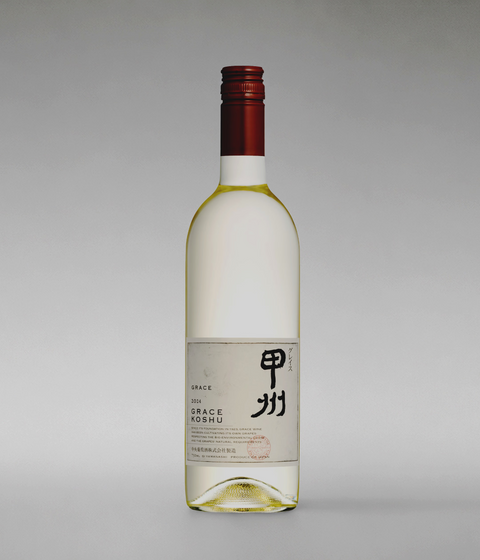
Grace Wine is widely considered one of Japan's finest producers — and we are so excited to announce that we now carry their wines at Japanese Wine Co.
Founded in 1923 by Chotaro Misawa in Katsunuma, Yamanashi, Grace Wine has been a family operation for four generations. Today, winemaker Ayana Misawa — Chotaro's great-great-granddaughter — leads the winemaking, and she's been instrumental in putting Japanese wine on the global stage.
Their Grace Koshu is a wonderful expression of the grape — citrus-forward, clean mineral finish, with a refined balance of acidity and subtle fruit richness. Grace insists on using only grapes grown above 400 metres in elevation, and every bunch is covered with a shade to protect against autumn rain. That kind of attention to detail shows up in the glass.
In 2014, their Cuvée Misawa Akeno Koshu became the first Japanese wine to win a Gold Medal at the Decanter World Wine Awards — and they went on to win Gold six years in a row. Their 2016 vintage scored 98 points, the highest score for any Asian wine at that competition. Bloomberg also selected their wine as one of the World's Top 10 Wines. Pretty remarkable for a grape most people outside Japan had never heard of.
We also carry their Akeno Japanese Red Wine — a great option if you want to explore Japanese wine beyond Koshu.
Grace Wine has been one of the most active voices in promoting Koshu internationally — their chairman Shigekazu Misawa is also the chairman of Koshu of Japan, the trade organization that has been driving exports since 2009.
We're truly honored to be partnering with Grace Wine alongside Kazumi Wines. Having both a Yamanashi-grown Koshu and a Napa Valley-grown Koshu side by side — that's a pretty special thing.
Château Mercian
One of Japan's largest and most influential wineries — and the oldest, tracing its roots back to 1877.
Their Koshu Gris de Gris is a well-known expression — delicate floral aromas, grapefruit and white peach, with that subtle minerality that Koshu does so well.
Château Mercian also pioneered the sur lie method for Koshu back in 1984, helping transform how the grape was made across the entire region.
Katsunuma Winery (Aruga Branca)
Their Aruga Branca Koshu is considered one of the pioneers of the modern Koshu style — light-bodied, fresh, with notes of apple, citrus, and herbs.
Katsunuma is right in the heart of Yamanashi wine country, and it shows in the wine. They were also the first to bring Koshu to the global market, earning medals in French wine competitions that put Japanese wine on the international map.
Lumière Winery
One of Yamanashi's most historic wineries, established in 1885.
Lumière tends to produce a slightly richer expression of Koshu — hints of pear and honey alongside the classic citrus notes, sometimes with a touch of oak aging.
Their Hikari Koshu (barrel fermented) won a Platinum medal at the Decanter World Wine Awards in 2021.
Koshu's Growing Global Reputation
For most of its history, Koshu was essentially Japan's best-kept secret.
A grape grown in one prefecture, enjoyed mostly by locals, largely unknown outside the country.
That's been changing fast.
A Major Milestone in 2010
The turning point came in 2010, when Koshu was officially registered with the Organisation Internationale de la Vigne et du Vin (OIV) — the international body that governs the wine world.
This was a big deal.
It meant Koshu was formally recognized as a distinct grape variety on the world stage, and Japanese producers could now market their wines internationally under the Koshu name with full legitimacy.
It opened a lot of doors.
International Awards & Recognition
Japanese wines have been showing up more and more at prestigious global competitions like the Decanter World Wine Awards and the International Wine Challenge — and earning medals.
Koshu in particular has caught the attention of sommeliers around the world, who appreciate its elegance and its genuinely unique identity.
It's not just winning awards for being "good for a Japanese wine."
It's being taken seriously on its own terms.
Why the Timing is Perfect
Here's something interesting — several global trends are working in Koshu's favor right now.
- Food-friendly wines are having a moment. Modern diners increasingly want wines that complement food rather than overpower it. Koshu is perfectly positioned for this.
- Wine lovers are seeking out indigenous grapes. There's real excitement right now about discovering varieties beyond the classic Cabernet-Chardonnay world. Koshu fits that curiosity perfectly.
- Japanese cuisine is everywhere. As Japanese food continues to grow in popularity globally — in cities like London, New York, and Los Angeles — sommeliers are naturally reaching for Japanese wine to match. Koshu is the obvious flagship.
Where It's Heading
Production is still relatively small, and finding Koshu outside Japan can take a little effort. But that's changing. Japanese wineries are now exporting to the United Kingdom, the United States, Singapore, and beyond.
Many wine experts believe that within the next few decades, Koshu will develop distinct regional expressions — different terroirs within Yamanashi producing noticeably different wines, the way different villages in Burgundy do today. The experimentation with sparkling, orange, and barrel-aged styles already underway suggests the grape still has plenty of surprises ahead.
Koshu is no longer just Japan's secret. The rest of the world is starting to catch on.
Koshu & Japan's Wider Wine Identity
Koshu doesn't exist in isolation.
It's the white flagship of Japanese wine — but Japan has another indigenous variety that handles the red side of the story.
Muscat Bailey A (マスカット・ベーリーA), often abbreviated as MBA, is a red grape developed in Japan in 1927 by viticulturist Zenbei Kawakami — widely known as the "grandfather of Japanese wine." It was created specifically to thrive in Japan's humid climate — a deliberate attempt to build a native red variety that could do what Koshu does for whites.
MBA-based wines tend to be light to medium-bodied with bright red fruit, low tannins, and a gentle sweetness — not unlike Koshu in their approachability and food-friendliness. In 2013, Muscat Bailey A was officially registered with the OIV, following Koshu's registration in 2010, giving it the same international recognition as a distinct Japanese variety.
Together, Koshu and Muscat Bailey A form the foundation of Japan's indigenous wine identity — one white, one red, both shaped by the country's unique climate, history, and approach to craftsmanship.
Conclusion
When we first tried Koshu at Eigikutei that evening, I didn't expect it to become something we'd think about this much. But here we are — writing a 6,000-word guide about it, partnering with two incredible wineries, and genuinely excited to share this grape with as many people as possible.
If you've made it this far, I hope you're at least a little curious to try it.
We carry both Kazumi's Napa Valley Koshu and Grace Koshu from Yamanashi at Japanese Wine Co. — and if you want to go beyond Koshu, we also have Kazumi's Napa Valley Cabernet Sauvignon (2023, 95 pts) and Grace Wine's Akeno Japanese Red Wine.
My recommendation? Grab a bottle of Koshu, make some sushi or order your favorite Japanese takeout, and see what happens. That first sip with food is where the magic is.
If you have any questions about Koshu or any of the wines we carry, please don't hesitate to reach out to us. We love talking about this stuff.
Thank you for reading — and we hope you enjoy exploring Koshu as much as we have!
Frequently Asked Questions - Koshu Wine
What does Koshu wine taste like?
What foods pair best with Koshu wine?
How is Koshu different from Pinot Grigio, Riesling, or Sauvignon Blanc?
Where does Koshu wine come from? Is all Koshu grown in Japan?
Is Koshu a sweet wine?
Related products
About the author

Subscribe to the Japanese Wine Club
Sign up for free to the Japanese Wine Club to get advice, exclusive articles, tips, and special offers.

Comments (0)
There are no comments for this article. Be the first one to leave a message!