

Everything You Need to Know About Kazumi Wine
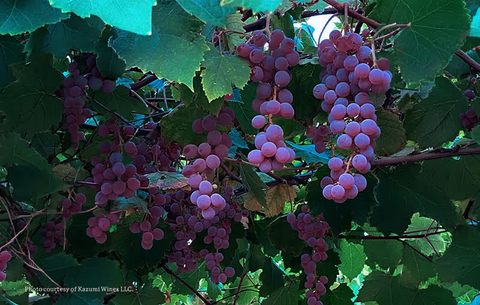
Table of Contents
Introduction
Most American wine stories start with someone leaving a corporate job to chase a dream. Michelle Sakazaki's started with a wildfire.
In 2017, the Tubbs and Atlas Fires tore through Napa. Among the things lost in that fire was the Sakazaki family's small backyard hobby vineyard, on the edge of Milliken Creek Canyon. When the family started talking about replanting, a friend shared a discovery that, in retrospect, changed the entire trajectory of Kazumi Wines: Koshu (甲州) vines existed at UC Davis Foundation Plant Services. Michelle purchased canes from UC Davis and planted them.
Most people would have said no. Koshu had never been grown commercially in the United States — there was no playbook to follow, no neighbors to ask, nobody who could tell them what was going to happen.
They said yes anyway. Five years later, Kazumi Wines became the first and only winery in the United States to commercially plant, harvest, and bottle Koshu, Japan's signature white grape.
That bottle — the Kazumi Napa Valley Koshu — is one of two Kazumi wines we carry at Japanese Wine Co. The other is the Kazumi Napa Valley Cabernet Sauvignon, which is itself one of the most acclaimed small-production Cabs in Napa right now.
I tell the longer story of how Miki and I first tasted Kazumi in our Koshu wine guide — over shabu-shabu at Eigikutei in Little Tokyo, hosted by Morishita-san. That was the moment we realized this was the bottle that needed to be on our shelves.
This is everything I've learned about Kazumi Wines since.

Who is Michelle Sakazaki?

Michelle Kazumi Sakazaki isn't a winemaker by training. By instinct, though, she pretty obviously is.
She was born in California and raised in Tokyo. Her early career was in fashion — she studied fashion design, moved to Milan, worked for Missoni and Armani Exchange, eventually moving to New York. From what I've read, the wine bug caught her in Italy. Working in fashion in a country where wine is part of every meal will do that.
The career pivot wasn't sudden. She earned her WSET Diploma (the wine industry's most rigorous formal credential) and an MBA. She then spent 12 years as General Manager at 90 Plus Wine Club, the Napa-based wine club business — running the operational side of the business while learning the industry from the inside out.
Kazumi Wines launched in 2015. Michelle's first move was to buy half a ton of Sauvignon Blanc grapes from the Perret family's vineyard in Rutherford, who she'd known for years. She crowdfunded the production. The wine sold out before it was even bottled.
The name Kazumi is her middle name. The kanji are 和美 — 和 (kazu) meaning harmony, 美 (mi) meaning beauty. Michelle painted the watercolor on the bottle label herself, which is one of those small details that tells you something about the project.
The 2017 Wildfires and the Koshu Pivot
By 2016, Kazumi had grown beyond the original Sauvignon Blanc. Michelle added a Cabernet Sauvignon from Oakville — one of the most prestigious sub-AVAs in Napa — and brought on Kale Anderson as consulting winemaker. (Kale's resume includes Pahlmeyer and Cliff Lede; he's a serious figure in Napa winemaking.) The Cab quickly became the headline wine.
Then 2017 happened.
The October fires that swept through Napa and Sonoma were the worst in modern California history. The Sakazaki family lost their backyard hobby vineyard at Milliken Creek Canyon — a small, personal project of Michelle's father, Jack Sakazaki, who had been growing grapes for the family table for years.
When the family started planning the replanting, a friend reached out with an idea that probably sounded a little crazy at the time: Koshu was available at the UC Davis grape repository — the same institution that holds and propagates rare varietals from around the world. Michelle and Jack purchased Koshu canes from UC Davis and planted them.
Koshu had been registered with the Office International de la Vigne et du Vin (OIV) as an official grape variety in 2010, finally clearing the path for international planting outside Japan. But no one in the US had actually tried.
Michelle, Jack, and Kale agreed to do it as an experiment. They planted a small test plot. The vines took to the climate better than anyone expected, and when the fruit started coming in, it looked promising. That's the part of the story that surprised everyone, including Michelle.

The Koshu Project — First in America
Between 2019 and 2022, Kazumi expanded the test plot into proper commercial plantings at two Napa vineyards:
- Bayview Vineyards — South Napa Valley
- Karabian Vineyard — Oak Knoll District of Napa Valley
Both sites have the cooler climate and the calcareous soils that Koshu seems to prefer — not so different in feel from the Yamanashi (山梨) basin, just on the other side of the Pacific.
The first commercial release came in 2022. The third vintage is what we're now selling.
The thing that's worth understanding here is that this isn't a marketing-driven novelty bottle. The vines took years to establish. The fermentation and aging program (which I'll describe in a second) was developed specifically for the Napa expression of the grape — not as a copy of a Japanese style. And the Wine Palate, an independent review publication, scored the wine 94 points. Critics noticed.
If you've read about Koshu in our Koshu wine guide, you already know the grape's history goes back roughly a thousand years. Bringing it to Napa is technically a homecoming for a vine that originated near the Caucasus and traveled the Silk Road to Japan. But practically, this is the first time it's been grown commercially in the Western Hemisphere. That's a real first.
The Two Bottles We Carry at Japanese Wine Co.
Kazumi makes a small range — Sauvignon Blanc (Rutherford), Cabernet Sauvignon (Oakville), Koshu (Napa Valley), and a recently-released Russian River Pinot Noir. We carry the two that we think most directly tell Kazumi's story.
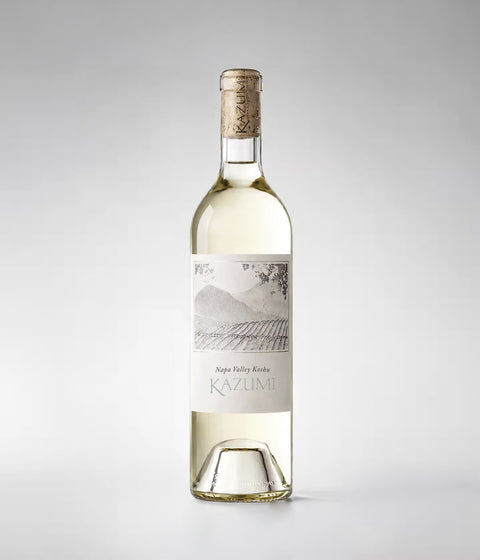
Kazumi Napa Valley Koshu
The 2024 vintage. 100% Koshu, Napa Valley AVA, harvested September 23, 2024.
The fermentation program is more complex than a typical Koshu — and that's deliberate. The juice is split: 70% in neutral French oak barrels, 24% in stainless steel drums, 6% in new French oak. Then four months of total aging, with two of those months sur lie (on the lees, which adds richness and texture). The mostly-neutral oak gives the wine a bit more body and a subtle creaminess without overwriting the grape's own character.
The result is a Koshu that feels distinctly American without losing what makes Koshu, Koshu.
What you'll smell: white florals, then bright citrus — kumquat, mandarin, a touch of grapefruit. Underneath, a flinty minerality and a whisper of beeswax that gets more pronounced as the bottle opens.
What you'll taste: grapefruit, lime, crisp apple, with that pronounced mineral streak and a touch of coastal salinity that feels like an ocean breeze. Lively, mouthwatering acidity. The finish is clean and energetic. It's a wine that doesn't sit still in the glass.
Critical recognition: 94 points from The Wine Palate. The first US-grown Koshu to earn a serious review score.
Kazumi Napa Valley Koshu — 94 Point White Wine
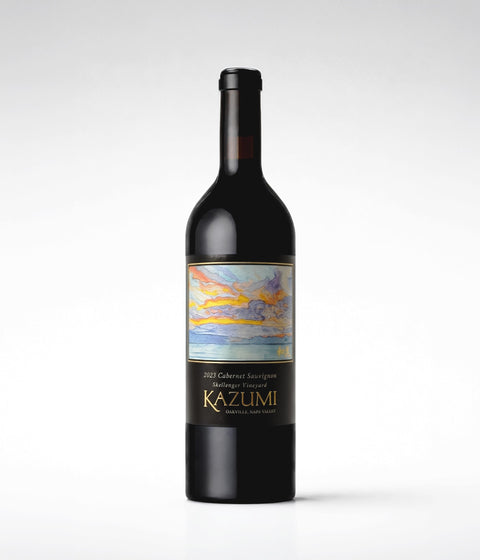
Kazumi Napa Valley Cabernet Sauvignon
This is the wine that earned Kazumi serious critical attention in the broader Napa context, and it's worth understanding why. The fruit comes from Skellenger Vineyard in Oakville, the heart of Napa's Cab country, and it is made in tiny quantities — so each vintage stands on its own. We are currently carrying the 2023.
2023 — the vintage we are currently carrying · 95 points, The Wine Palate
100% Cabernet Sauvignon, Clone 4, harvested October 20, 2023. Fermented in open-top fermenters, then aged 20 months in 100% French oak, 60% of it new. 1,200 bottles produced.
What you'll smell: blackberry, bramble and currant, lifted by violet and a subtle hint of licorice. Give it time in the glass and a delicate minerality and savory undertone emerge.
What you'll taste: concentrated blackberry, currant and wild bramble, with a touch of spice through the mid-palate. Silky, well-integrated tannins and a lively backbone of acidity carry it to a long, persistent finish marked by savory mineral nuance.
2022 — the preceding vintage, now sold out · 94 points, The Wine Palate · 91 points, Jeb Dunnuck
100% Cabernet Sauvignon, harvested October 21, 2022. Whole-berry fermentation in oak puncheons, then 18 months in new French oak. 1,400 bottles produced.
Violet first — unusual for Napa Cab — then plum, currant and blackberry with black pepper and tobacco rolling underneath, the new oak arriving as a touch of cocoa rather than a sledgehammer. On the palate, rich plum, currant and blackberry deepening into cocoa and pepper, with ripe silky tannins, vibrant acidity and a long, well-integrated finish.
Jeb Dunnuck is one of the most respected independent wine critics in the world (formerly Robert Parker Wine Advocate, now publishing under his own name). His 91 points on the 2022 — a small-production Napa Cab — is genuinely meaningful; it puts this wine in the conversation with bottles four to ten times the price.
It's the kind of Cabernet you can pour at a dinner party and people will ask what it is.
Kazumi Napa Valley Cabernet Sauvignon (2023) — 95 Point Red Wine

The Team Behind Kazumi
Kazumi is small enough that the people involved actually matter on a per-bottle basis. The core team:
Michelle Kazumi Sakazaki — Founder and proprietor. The vision, the brand, the painted labels, and the relationships with the growers. She still runs the day-to-day.
Jack Sakazaki — Michelle's father, the original backyard grape grower who lost his hobby vineyard in the 2017 fires. He's deeply involved in the Koshu project. The father-daughter dynamic isn't a marketing detail — it's why the Koshu replanting happened at all.
Kale Anderson — Consulting winemaker since 2016. Kale's broader Napa work is well-respected (Pahlmeyer, Cliff Lede). Bringing him on for the Koshu project was a deliberate move — Michelle and Jack wanted someone with both the technical chops and the curiosity to figure out Koshu in California in real time.
Jane Aitong Jiang — Assistant Winemaker since 2022. She is essential to Kale Consulting, making sure everything runs smoothly in the cellar.
It's a small team for a project that's gotten this much critical attention. That's part of why the wines feel like wines, not products.
Kazumi vs. Grace — The Two Koshus, Side by Side
The most interesting wine experience we offer at Japanese Wine Co. right now is genuinely simple: buy a bottle of Kazumi Napa Valley Koshu and a bottle of Grace Koshu, pour them side by side, and taste the same grape grown 5,000 miles apart.
If you want the full story on Grace — the century-old Yamanashi family producer that's won six straight Decanter awards — see our Grace Wine Japan article. Here's the short version of how the two wines differ in the glass.
Grace Koshu (Katsunuma, Yamanashi):
- Granitic soils, century-old vines, traditional pergola system
- Stainless steel only — no oak, no sur lie
- More reserved, flinty, with a subtle umami round-out
- The "Japanese tradition" expression of the grape
Kazumi Napa Valley Koshu (South Napa + Oak Knoll):
- Cooler-climate Napa, calcareous soils, modern VSP plantings
- 70% neutral French oak + 24% steel + 6% new French oak, 2 months sur lie
- More fruit-forward (kumquat, beeswax), slightly riper, distinct coastal salinity
- The "American interpretation" of the grape — same DNA, different terroir
Both bottles are recognizably Koshu — light-bodied, dry, with the citrus profile the grape always brings. But once you've got them in two glasses, the differences in soil and climate (and the way each side handles the grape in the cellar) become very obvious. Even people who don't usually pay attention to wine pick up the contrast right away.
This is the kind of tasting experience we used to think you had to fly to Japan for. Now you can do it at your kitchen table.

How to Drink Kazumi at Home
Pairing-wise, here's how I think about both bottles.
Kazumi Napa Valley Koshu Pairings
- Sushi (寿司) and sashimi. The default Koshu pairing. The salinity actually amplifies the brininess of really good ahi or hamachi — it's a different effect than what Grace does, more aggressive, in a good way.
- Ceviche. Lime + citrus wine + raw fish is a flavor triangle that just works.
- Crab — especially Dungeness. The mineral backbone of the wine handles the natural sweetness of crab without getting overwhelmed.
- Lemon-roasted chicken. The wine has enough body (thanks to that sur lie / oak program) to handle a light meat dish.
- Goat cheese on a green salad with citrus vinaigrette. Match acidity to acidity.
- Chilean sea bass with butter-soy. The sweet-savory umami of butter-soy plays well with the wine's coastal mineral notes.
Kazumi Napa Valley Cabernet Sauvignon Pairings
- Wagyu beef. The silky tannins of the Cab are unusually well-suited to wagyu's high marbling — most big Napa Cabs are too aggressive for it.
- Lamb chops with rosemary. The herbal note in the wine's finish picks up the rosemary directly.
- Grilled duck breast. Duck loves a Napa Cab; this one's silky tannins make the pairing especially graceful.
- Bone-in ribeye. Standard luxury-Cab pairing. Don't overthink it.
- Aged hard cheeses. Parmigiano-Reggiano with three years of aging, mature Comté, aged Manchego.
- Dark chocolate (70%+). A small square at the end of the meal. The cocoa notes in the wine echo the chocolate, the tannins handle the bitterness.
One pairing note for the Cab: decant it for at least 30 minutes before serving. It's young, it's freshly oaked, and giving it air to breathe lets the violet aromatic note really come through. Without the decant, you'll get more of the oak and less of the fruit. With it, the balance is much better.
Why We Carry Kazumi at Japanese Wine Co.
Coming back to the start: Kazumi is one of those projects that feels almost made-up if you only hear the bullet points. Japanese-American family, raised between California and Tokyo. Fashion design in Milan. WSET diploma, then twelve years running a Napa wine club. 2017 wildfire destroys the family's backyard vineyard. Replanting brings in Koshu canes from UC Davis. The result becomes the first commercial American Koshu, scoring 94 points and showing up on Michelin lists.

Miki at Eigetsutei trying Kazumi Wine for the first time
It's the kind of arc that feels like a documentary pitch rather than a wine catalog story. But it's just what happened.
We carry both Kazumi bottles because each tells a different part of the same story. The Koshu is the breakthrough wine — the one that made Kazumi historically significant. The Cabernet Sauvignon is the wine that proves Kazumi belongs in the same conversation as serious Napa producers.
If you're new to Kazumi, start with the Koshu. Pour it side by side with Grace from Yamanashi, the way we recommended in the comparison section above. Then come back for the Cab — ideally with a steak dinner and friends who know their wine.
And if you ever find yourself in Little Tokyo, Los Angeles, with an evening to spare, do what Miki and I did: walk into Eigikutei, ask Morishita-san what he recommends, and let him pour you the Kazumi for the first time. That's the experience the bottle was made for.
Frequently Asked Questions - Kazumi Wine
How did Kazumi become the first US winery to grow Koshu?
Related products

About the author

Subscribe to the Japanese Wine Club
Sign up for free to the Japanese Wine Club to get advice, exclusive articles, tips, and special offers.

Comments (0)
There are no comments for this article. Be the first one to leave a message!