

Muscat Bailey A (マスカット・ベーリーA) — Everything You Need to Know About Japan's Own Red Wine Grape
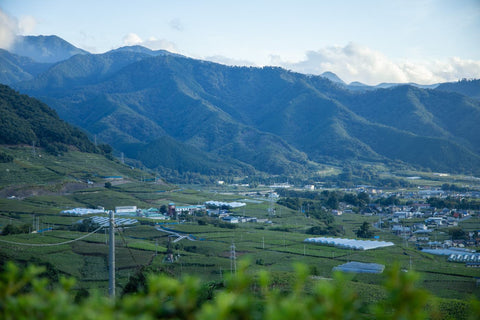
Table of contents
Introduction
After I published our big guide on Koshu wine, the most common question I got was some version of this:
"Okay, so that's the white. Does Japan have its own red?"
It does. And honestly, of the two stories, Japan’s red has the better one.
Koshu came to Japan the way most old grapes come to most places. It travelled. A thousand-odd years along the Silk Road, and there it was. Japan’s red has no such origin story. Nobody handed it over. It exists because one man in snow country spent the better part of his life crossing vines by hand, season after season, for the plain reason that the grapes everyone else in the world grew would not survive where he lived.
The grape is Muscat Bailey A (マスカット・ベーリーA), or MBA if you’re in a hurry, and it was made in 1927 by a breeder named Kawakami Zenbei (川上善兵衛). It is now the most widely planted red wine grape in the country. In 2013 it joined Koshu in the OIV’s official register, which is the wine world’s way of saying that a variety counts.
One disclosure before we go any further: we don’t currently carry a Muscat Bailey A at Japanese Wine Co. It doesn’t change anything. If you care about Japanese wine, this grape is half of what there is to know, so it gets the same treatment we gave Koshu.
What is Muscat Bailey A?
It’s a red wine grape, bred in Japan, for Japan.
The name looks fussy and is really just descriptive. Two parents: Bailey, a tough American hybrid, and Muscat Hamburg, a perfumed European table grape. Kawakami kept careful records and lettered the promising seedlings from each cross. From what I’ve read this one was crossing number 3,986, and it was selection A of the Bailey × Muscat Hamburg pairing.
Muscat Bailey A. The name is the recipe.
Worth clearing up straight away, because the word Muscat sets an expectation this wine doesn’t meet. What Muscat Hamburg passed down was perfume and a certain charm. Not sugar. Most MBA is made dry.
Color, Body & Key Characteristics
A typical bottle looks roughly like this.
- Color: bright ruby, and pale enough that you can more or less read through the glass
- Body: light, occasionally nudging into medium
- Alcohol: usually 11 to 12.5%
- Acidity: high enough to keep everything juicy
- Tannins: soft. Nothing that dries your mouth out
If your mental picture of red wine is an opaque, purple-black Cabernet, MBA is going to look thin next to it. It isn’t. That paleness is the style, and it turns out to be the whole reason the wine behaves so well at the table.

Flavor & Aroma Profile
This is the part that makes MBA impossible to confuse with anything else.
- Strawberry, first and loudest. Fresh strawberry, not jam
- Red cherry and raspberry underneath
- A sweet, almost confectionery perfume on the nose
- Something floral in there too, and rose petal is the comparison people reach for
- Oak-aged bottles add cinnamon and a little cocoa
That strawberry-candy smell is the grape’s signature. Smell it once, properly, and you will pick MBA out of a blind lineup for the rest of your life.
The Candy Note, and the Chemistry Behind It
Indulge me for a paragraph of wine chemistry, because I find this genuinely great.
Most of that aroma traces to a compound called furaneol, the same molecule that makes strawberries smell like strawberries and cotton candy smell like cotton candy. MBA berries carry unusually high concentrations of it, enough that researchers have studied the variety specifically, and one team went further and identified the precursor in the grape that releases the aroma during winemaking.
So when someone tells you an MBA smells like strawberry candy, that isn’t a flight of fancy. It’s chemistry.
And then it surprises you, because the wine almost always tastes dry. Sweet nose, dry palate. Living in the gap between those two is more or less what drinking MBA is.
Kawakami Zenbei, the Man Who Built a Grape
The grape doesn’t make sense without the man. Almost every famous variety in the world is a happy accident with no clear parent. This one has an author.
Snow Country
Kawakami Zenbei (川上善兵衛) was born in 1868, the year of the Meiji Restoration, in what is now Joetsu (上越) in Niigata Prefecture (新潟県), on the Sea of Japan coast.
Snow country, and I mean that literally. The region disappears under snow every winter, and in Kawakami’s day the summers flooded. Rice farming was unreliable enough that people had a phrase for it: sannen issaku (三年一作). Three years, one harvest.
He came from a landowning family and became its head as a boy, his father having died young. So he grew up watching the farmers on his own land live through that cycle. From everything I’ve read, that is what set the course of his life. He wasn’t after a wine fortune. He wanted a crop, ideally an industry, that could take what Niigata threw at it and give the people around him something to count on.
He studied at Keio in Tokyo and taught himself English and French. He also found a mentor in Katsu Kaishu (勝海舟), one of the towering statesmen of the period, who told him to take winemaking seriously.
In 1890, aged 22, he cleared a stretch of rocky family land nobody had bothered farming and planted a vineyard. He named it after what it was. Iwanohara (岩の原葡萄園), the field of rocks.

The Snow Cellar
My favorite detail in the whole story: in 1898 he built what is said to be Japan’s first yukimuro (雪室), a snow room, at the winery.

The problem was that summers ran too warm to control fermentation and refrigeration did not yet exist. His answer was the one resource Joetsu has in ridiculous surplus. Snow, cut in winter, packed around the fermentation cellar and left to cool the tanks through the warm months.
He took the region’s single biggest liability and turned it into equipment. The cellar is still standing, and you can go and see it.
10,311 Crosses
Now for the number that made his reputation.
European wine grapes kept dying in Japan. Cabernet, Chardonnay, all of them. Too much rain, too much humidity, far too much disease. American grapes could handle the weather but made rough, forgettable wine.
Kawakami’s conclusion was that Japan needed grapes that did not yet exist, so he set about making them. Over his life he carried out 10,311 crossings. Twenty-two of the resulting varieties were good enough to show the world, which he finally did at an academic conference in 1940, at the age of 72.
Cross number 3,986, made in 1927, was the one. Bailey supplied thick skins, disease tolerance and a general willingness to put up with Japanese weather. Muscat Hamburg supplied the fragrance and the red fruit.
Somewhere along the way the work caught the eye of Torii Shinjiro, founder of Kotobukiya, the company that would later rename itself Suntory. In June 1934 the two of them incorporated Iwanohara as a joint-stock company, Torii putting up capital alongside the Kawakami family, both sides running it together.
Two years on, Torii revived Kotobukiya’s vineyard in Yamanashi, the estate known today as Suntory Tomi no Oka, and planted it with Kawakami’s vines. Muscat Bailey A was one of the founding varieties there. So the grape bred in Niigata snow country put down roots in Yamanashi too, in the prefecture that is now its heartland.
The arrangement outlasted both men. Iwanohara is a Suntory subsidiary to this day. Kawakami took the Japan Prize of Agricultural Science in 1941 and was still working when he died in 1944.
In Japan he is remembered by one title: the father of Japanese wine grapes. Getting on for a century after that 1927 cross, with his grape still the country’s leading red, nobody is arguing with it.

How Muscat Bailey A Is Grown
Every quirk of this grape makes sense the moment you remember what it was built to do.
A Japanese growing season comes at a vine in three waves. Frost in spring, humidity and disease in summer, rain and typhoons in autumn. MBA has an answer for each.
- It buds late, so the frost misses it
- It has thick skins, which is most of the battle against summer fungal disease
- It ripens reliably, early enough to beat the worst of the autumn weather
European vines in Japan need constant defending. MBA, for the most part, just grows. That was the brief, and Kawakami delivered it.
You’ll find it growing from central Honshu down to Kyushu, a range very few quality wine grapes in Japan can manage. The heartland is Yamanashi (山梨), the same prefecture that gives us Koshu and Grace Wine, whose Akeno red we carry, with Nagano (長野) and Yamagata (山形) not far behind. Recent industry figures show the plantings creeping north, Yamagata growing quickly as the climate warms. A grape built for Japan’s weather, now following that weather up the map.
In raw numbers, MBA is the most planted red wine grape in Japan and second overall only to Koshu, at roughly 14% of the country’s wine production. Which is to say that one bottle in seven traces back to Kawakami’s field of rocks.

Styles of Muscat Bailey A
MBA spent a long time with a reputation problem at home. It was the workhorse behind cheap, fruity, faintly sweet everyday wine. High yields, low ambition.
That is changing fast, and it’s one of the better quality stories in Japanese wine at the moment. Growers who cut their yields and treat the variety with some respect are turning out wines that have made critics revisit their assumptions, much the way Beaujolais eventually forced everyone to reconsider Gamay.
Here’s what you’re likely to run into.
Fresh & Fruity
The default modern style. No oak, lots of strawberry and cherry, made to be drunk young and often better for twenty minutes in the fridge. Start here if the grape is new to you. It’s MBA with nothing hidden.
Nouveau
Japan has a new-wine tradition of its own and MBA is the star of it. Every November the fresh nouveau is released and celebrated in Yamanashi, Beaujolais Nouveau with a different accent, festival atmosphere included. If you happen to be in Japanese wine country in late autumn, go.
Rosé
MBA makes rosé almost by default, given the pale color and all that strawberry. The good ones are aromatic without being sweet, and they disappear alarmingly fast on a warm afternoon.

Barrel-Aged
This is where things get more serious. Yields come down, the wine goes into barrel, and MBA turns out to have a second gear nobody expected. The candy note darkens, so you get cherry instead of strawberry, plus cinnamon, a bit of cocoa, and enough structure to hold the whole thing up for a few years. A few producers age it in mizunara, which is the oak the whisky world made famous. Anyone who thinks MBA is a simple wine should be handed one of these first.

Sparkling
A smaller category. The acidity and perfume take to bubbles nicely, usually in a fresh, fruity style.
Quick Reference: MBA Styles at a Glance

| Style | Color | Body | Key Aromas | Best First Bottle For… |
|---|---|---|---|---|
| Fresh & Fruity | Bright ruby | Light | Strawberry, cherry, candy | Almost everyone |
| Nouveau | Vivid purple-red | Very light | Fresh berries, bubblegum | The curious, in November |
| Rosé | Pale pink | Light | Strawberry, florals | Summer afternoons |
| Barrel-Aged | Deeper ruby | Medium | Dark cherry, spice, cocoa | Skeptical red wine lovers |
| Sparkling | Pale ruby/pink | Light | Berries, florals | Celebrations, aperitifs |
How Muscat Bailey A Compares to Other Reds
If you’ve never had a glass, here’s where it sits relative to wines you already know.
MBA vs. Beaujolais (Gamay)
Wine writers reach for this comparison constantly, and they are not wrong to. Both wines are light and juicy with very little tannin, both are better with a chill on them, both have a nouveau tradition, and both spent a long stretch being dismissed until a few stubborn producers made that position untenable. If you already drink Beaujolais, this is the easiest way into Japanese wine there is.
MBA vs. Pinot Noir
Both are light-bodied and pale enough to see through, and that’s about where the resemblance stops. Pinot is the quieter wine. Earthy, structured, a little withholding. MBA has no interest in being coy, and leads with strawberry and perfume. Pinot rewards you for paying attention. MBA is happy if you just enjoy your dinner. I drink both, on different evenings.
MBA vs. Its Muscat Heritage
People see Muscat on the label and expect Moscato. That is not what arrives. Muscat Hamburg passed on its perfume and kept its sugar, so almost every MBA you meet will be dry. The inheritance is aromatic rather than sweet, and it catches people out every time.
The Bigger Picture
What I keep coming back to is this. MBA isn’t a Japanese attempt at somebody else’s grape. People like to call Koshu Japan’s answer to Pinot Grigio, and MBA Japan’s Beaujolais, and both of those sell the thing short. No breeder in France ever had to plan around typhoon season. Kawakami did. What he made solves a problem nobody else in the wine world had, and it tastes like the place that needed it.
Food Pairing: Where MBA Quietly Wins
Remember the umami problem from our Koshu guide? This is the red wine chapter of it.
Big tannic reds pick fights with Japanese food. Soy, mirin and sweet glazes flatten a Cabernet and turn its tannins bitter. MBA brings almost nothing to fight with. The tannins are soft, the acid is lively, and that sweet berry aroma runs alongside a good tare glaze rather than into it.

Pairings worth trying:
- Yakitori with tare, where the glaze and the strawberry fruit meet each other halfway
- Sukiyaki, possibly the best pairing there is for this grape. The sweet-savory broth and the wine seem to have been designed together
- Unagi kabayaki, grilled eel in sweet sauce, a dish notorious for defeating wine, which MBA takes in stride
- Teriyaki anything: chicken, salmon, meatballs, whatever you have
- Miso-glazed fish, umami again, and the same logic applies
It travels outside Japanese food too. Roast duck, grilled pork, Cantonese braises, anything with tomato. It even settles the annual Thanksgiving argument, since a lightly chilled MBA copes with the sweet-savory chaos of that table better than most far more famous reds.
Serve it cool, somewhere around 14 to 16°C (57 to 61°F), exactly as you’d treat a good Beaujolais. Cellar temperature, not room temperature.

Notable Producers
Hundreds of wineries make MBA. A few names are worth committing to memory.
Iwanohara Vineyard (岩の原葡萄園)
The source. Kawakami’s own winery in Joetsu, snow cellar included, is still making wine from his grape nearly 140 years on, now under the Suntory umbrella. Their MBA bottlings are the reference point for the variety. The flagship red, Miyukibana (深雪花, deep-snow flower), was poured for world leaders at the 2019 G20 in Osaka. Three years, one harvest, to the G20 table. I don’t imagine Kawakami saw that coming.
Can you visit? Yes. The winery shop and vineyard are open to visitors, and the cellars are shown by guided tour on advance reservation. On site are the No. 1 Ishikura, the oldest surviving wine cellar in Japan and a Registered Tangible Cultural Property, the No. 2 Ishikura with its yukimuro, and a room of Kawakami’s own papers and records.
iwanohara.sgn.ne.jp
1223 Kitagata, Joetsu, Niigata 943-0412, Japan
〒943-0412 新潟県上越市北方1223番地
Château Mercian
One of the largest and most historic producers in the country, and the house that pioneered sur-lie Koshu. Their barrel-aged Muscat Bailey A shows how far the grape can travel once the yields come down.
Can you visit? Yes. The wine museum and gallery are open without a reservation, and guided tours run by advance booking, including tours in English. The museum building is the 1904 winery itself, the oldest wooden winery still standing in Japan.
chateaumercian.com
1106-1 Shimoiwasaki, Katsunuma-cho, Koshu, Yamanashi 409-1313, Japan
〒409-1313 山梨県甲州市勝沼町下岩崎1106-1
Kurambon Wine
A small family winery farming sustainably in Katsunuma, in the Yamanashi heartland. Their quality-first MBA has done a lot to change how the grape gets discussed outside Japan.
Can you visit? Yes. Visiting and tasting are free, and a short cellar tour runs twice a day on reservation. Tastings are poured in the 130-year-old main house, and the tour takes in the underground cellar. It sits a few hundred metres up the same street as Château Mercian, so the two make an easy pair on one trip.
kurambon.com
835 Shimoiwasaki, Katsunuma-cho, Koshu, Yamanashi 409-1313, Japan
〒409-1313 山梨県甲州市勝沼町下岩崎835
Recognition from the OIV
Readers of our Koshu guide will remember 2010 as the turning point for Japanese wine, the year Koshu was formally registered with the OIV, the Organisation Internationale de la Vigne et du Vin. Registration is what let Japanese producers finally print the grape’s name on labels sold in the EU. That’s the door opening.
In 2013, Muscat Bailey A walked through the same door, the first Japanese-bred red grape the OIV ever recognized.
Sit with what those two entries represent. Koshu is a thousand-year-old immigrant, carried along the Silk Road and slowly naturalized. Muscat Bailey A is an invention, assembled in a snowbound corner of Niigata by a man who declined to accept that Japan couldn’t have a red of its own. One inherited, one built, both now recognized internationally as Japanese.
Those two entries, three years apart, are when Japanese wine stopped being a curiosity and became a category.
Japan’s Red and White: The Complete Picture
Koshu and Muscat Bailey A are the two pillars of Japanese wine identity, the white and the red, each shaped by the same problem and each solving it in an entirely different way.
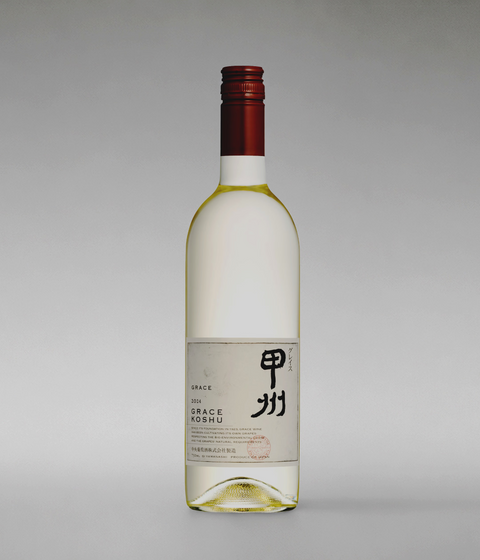
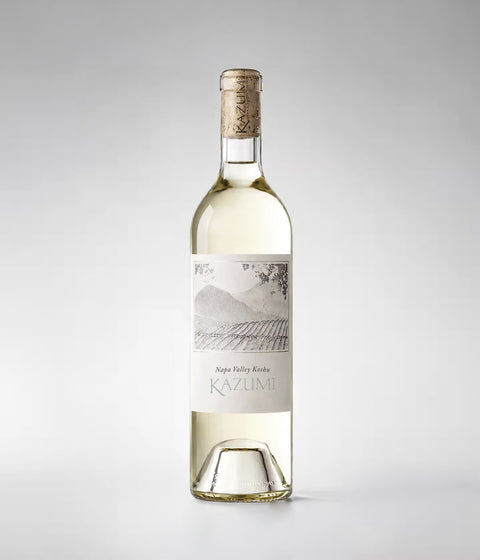
At Japanese Wine Co. we carry the white half of that story: the Decanter-decorated Grace Koshu from Katsunuma, Yamanashi, and the 94-point Kazumi Napa Valley Koshu, the only Koshu grown in America.
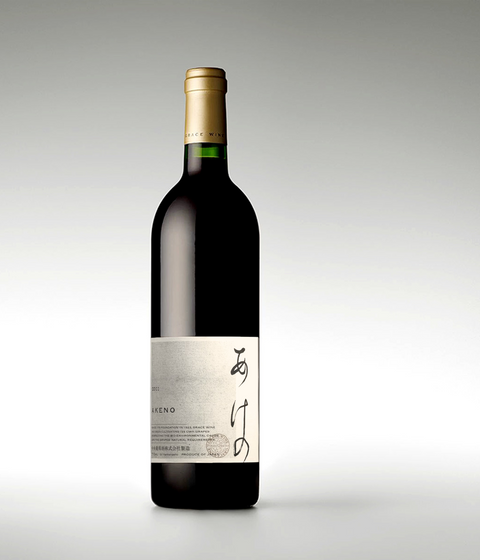
On the red side, our current Japanese red is Akeno from Grace Wine, a Bordeaux-style blend from Yamanashi rather than an MBA, and a good measure of how far Japanese red wine has come.
And an MBA of our own? Not yet. If that changes, this Journal is where you’ll hear about it first.
Conclusion
Every wine country has grapes it inherited. Almost none has a grape with an author.
Muscat Bailey A has one. A landowner’s son from snow country who watched farmers lose two harvests in three, studied under one of the great statesmen of the age, built Japan’s first snow-cooled cellar, and made 10,311 crosses so that his country could have a red wine to call its own. Eighty-six years after cross 3,986, the international wine world made it official.
So, a suggestion. The next time you’re in a Japanese restaurant with a real wine list, or a shop with a Japanese section, look for Muscat Bailey A and order it. Pay attention to the strawberry-candy nose, to how much light gets through the glass, and to how little effort it takes to get along with whatever you’re eating.

While you’re looking, the rest of Japan’s wine story is right here: start with a Grace Koshu or an Akeno, and read the full Koshu guide if you haven't yet.
Any questions about Japanese wine, or about anything we carry, please don't hesitate to reach out to us. We love talking about this stuff.
Thanks for reading. And here’s to the man who built a grape.
Related products


About the author

Subscribe to the Japanese Wine Club
Sign up for free to the Japanese Wine Club to get advice, exclusive articles, tips, and special offers.

Comments (0)
There are no comments for this article. Be the first one to leave a message!