

Maeve (メイヴ) — The "Miracle Grape" Discovered in a Japanese Backyard
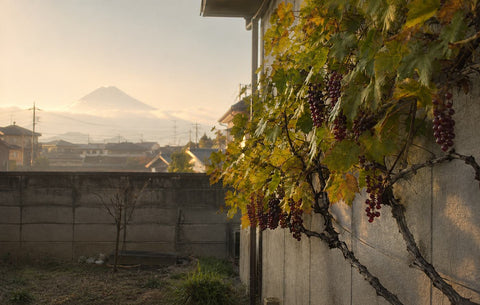
Table of contents
Introduction
I came across the story of Maeve (メイヴ) almost by accident, and I ended up reading about it for the rest of the evening.
A single grapevine growing in a backyard in Fujisawa (藤沢), Japan. An elderly man who tended it for 20 years without ever knowing what it was. A DNA test that came back with a result nobody expected: no match found anywhere in the world.
Maeve is a newly discovered Japanese grape variety, confirmed by genome analysis to be completely new — unlike anything previously recorded. In Japan it has picked up the nickname 奇跡のブドウ (kiseki no budou), the "miracle grape," and the list of traits behind that nickname is long. It survives winters as cold as −30°C (−22°F), grows in subtropical Okinawa, resists disease with little to no pesticide, and produces grapes with high sugar and high acidity at the same time. Winemakers will tell you that last combination is rare and extremely valuable.
And yet almost no one outside Japan has heard of it.
I want to change that.
I have not had the chance to try Maeve wine myself — commercial production is still in its very early stages, and bottles are extremely limited. But I have been following the story closely, and I think this grape could become one of the most exciting wine discoveries of the 21st century.

The Accidental Discovery
It started with a favor.
A few years ago, Toshitada Tanaka — the representative director of Shonan Inc., an IT company based in Fujisawa, Kanagawa — was approached by an elderly neighbor in his 80s. The man had been quietly tending a small hobby vineyard in the Goshomi area of Fujisawa for about 20 years. He was getting older and needed someone to take the vines off his hands.
Tanaka-san said yes. In May 2019, the vines were handed over.
That same year, with the help of volunteers, they harvested 100 kg (220 lb) of grapes and had them made into wine at a winery in Yoichi, Hokkaido. So far, so straightforward. Then came the moment that changed everything.
When it was time to label the bottles, they needed to identify the grape variety. Tanaka-san went back to the elderly man and asked him.
The answer? "I have no idea. I just grew it."
He had tended this vine for two decades without knowing what it was.
Tanaka-san sent samples to Japan's National Research Institute of Brewing (酒類総合研究所) for DNA analysis. The result stopped everyone in their tracks: cannot identify the variety in the database. No match. Anywhere.
So a favor between neighbors turned into a new grape variety. A research team at the Okinawa Institute of Science and Technology later ran a full genome analysis, and it came back the same way the first test had: nothing on record matched. The work has since moved to a graduate lab at Okayama University, where the characterization is still ongoing.
Tanaka-san described the result as completely unexpected — and he immediately recognized what it could mean for Fujisawa. He launched the "Shonan Wine Project" and hasn't looked back.
I have spent years working with tea farms across Japan, where most of the farmers I meet are past 60 and wondering who will take over their fields. That is usually where these stories end: the farmer retires, the field goes quiet. This one went the other way, and I think that is part of why it stayed with me.
The Name
Where does the name come from?
When Tanaka-san needed to name the mystery grape, he turned to the man who had grown it for 20 years. They chose Maeve (メイヴ) — the name of the elderly man's granddaughter, a young woman of mixed Japanese and Australian heritage. It is a Celtic name, Irish in origin, often translated as "she who intoxicates." For a wine grape, it fits perfectly.
From what I've read, when she turned 20 — the legal drinking age in Japan — Tanaka-san gave her a bottle of Maeve wine to mark the occasion.
There is something quietly beautiful about all of this. A vine grown in obscurity for two decades, named after someone its grower clearly adored. No corporate branding exercise. No marketing team. Just a personal choice that happened to produce a perfect name.
Maeve: a Japanese grape with an Irish name, rescued by an IT company, now growing on rooftops in Tokyo.

Five Traits That Set Maeve Apart
Most grape varieties are good at one or two things. Maeve seems to be good at almost everything, and the team at MaeVino (メイヴィノ), the Tokyo-based company working to bring Maeve to urban vineyards, points to five characteristics in particular.
1. Exceptionally High Sugar
In cultivation trials, Maeve has recorded a sugar level of 30 Brix. For context, most wine grapes are harvested somewhere between 20 and 26 Brix. Higher sugar means more concentrated fruit flavors, greater depth, and stronger aging potential. It also gives winemakers room to choose — harvest early for a lighter, fresher style, or leave the grapes on the vine for something richer.
2. High Acidity That Doesn't Drop
Sugar and acid normally trade off. The longer fruit hangs on the vine the riper it gets, and the more acidity it loses, so a grower picks a date and lives with the compromise. Maeve is reported to hold its acid much later into ripening, staying sharp while Brix keeps climbing. The evidence is thin, though: a handful of trial plots across a few seasons, not a long run of vintage data. I would file it under promising early observation.
3. Extreme Climate Adaptability
Maeve has grown successfully in some of the most demanding climates in Japan — from brutally cold Hokkaido in the north to subtropical Okinawa in the south. Most wine grapes would struggle in either environment, let alone both. More on this below, because the details are worth a section of their own.
4. Strong Disease Resistance
Humidity is what breaks wine grapes in Japan. The rainy season lands right when the fruit is most vulnerable, powdery and downy mildew move through a canopy fast, and plenty of Japanese vineyards end up on a spray schedule that would look excessive in Bordeaux or Napa. Maeve is not immune, and I want to be careful with that word, because no vine is. What growers describe is a vine that shrugs off pressure which would have them reaching for the sprayer with anything else. On the rooftop sites, where air moves and the leaves dry quickly, it has reportedly been the least troublesome part of the whole operation.
5. Low Pesticide Requirements
This one is really a consequence of the last. A vine that handles mildew largely on its own does not ask much of a spray tank, and the growers working with Maeve report using very little, with modest fertilizer inputs as well. For a small producer that is an entire cost line quietly disappearing. It probably lands differently for me than it will for most readers: I have spent years with Japanese farms, and I know how much of a grower's calendar gets organized around spraying, and how many of them would take the chance to do less of it.
Any one of these traits would make a grape interesting. Together they explain why researchers, winemakers, and urban-agriculture enthusiasts across Japan are paying such close attention.
The Science
The DNA test that came back "no match found" was only the beginning.
The full genome analysis was carried out by a research team at the Okinawa Institute of Science and Technology Graduate University (OIST), one of Japan's most respected scientific institutions. Their finding confirmed the first test: Maeve is a genuinely new variety with a genetic profile that matches no previously recorded grape.

The analysis also revealed something about Maeve's likely origins. It reportedly carries traits from two very different worlds — one parent line close to the American rootstock variety Riparia Gloire, known for hardiness and disease resistance, and the other a European Vitis vinifera of the Sauvignon family, the lineage behind high-quality winemaking. How those two came together in a Fujisawa backyard, naturally and without intentional breeding, remains unsolved.
That mixed parentage is the leading explanation for Maeve's unusual profile: the sugar, acidity, and winemaking potential of a European variety combined with the resilience of an American one.
Research has since passed to Okayama University's graduate school, where scientists continue working toward a fuller understanding of the variety and, eventually, its formal recognition and wider cultivation. Scientifically it is still early days, but what has already been confirmed is enough to keep the researchers busy.
A Short Introduction to Japanese Wine
If you are new to Japanese wine, you are not alone. Most people know sake far better. But Japan's winemaking history goes back further than many realize, and its wine culture has been quietly earning international respect for years.

Grape cultivation in Japan traditionally dates back to 718 AD, beginning in Katsunuma in Yamanashi Prefecture. For most of that history, grapes were grown as table fruit. Wine as we know it came much later — Japan's first European-style winery opened in 1877, though Japanese nobles had encountered wine through Portuguese missionaries in the 16th century.
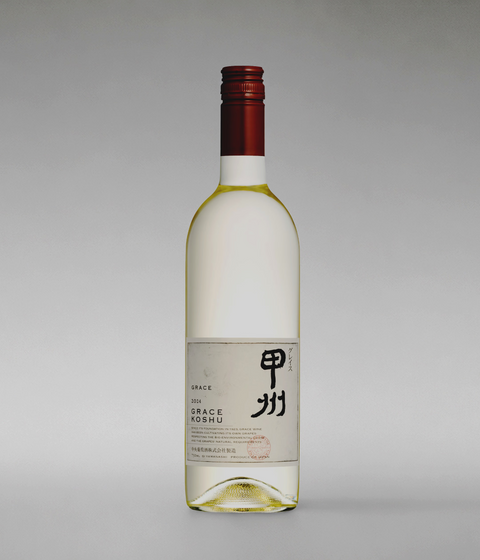
Today the main wine-producing regions are Yamanashi (31%), Nagano (23%), and Hokkaido (17%). Two indigenous varieties sit at the heart of Japanese wine. Koshu (甲州), a white grape cultivated for more than a thousand years, accounts for nearly 20% of all Japanese wine production — it is the grape behind our Grace Koshu, the Decanter Platinum winner. Muscat Bailey A (マスカットベリーA), developed by grape breeder Kawakami Zenbei in 1927, produces lightly colored reds with red fruit, moderate tannins, and juicy acidity. Koshu was officially recognized by the OIV — the international wine organization — in 2010, and Muscat Bailey A followed in 2013.
The biggest challenge Japanese winemakers face has always been climate. Japan's weather is too cold and damp for most popular wine-grape varieties, and the summer rainy season brings a constant threat of fungal disease. Hokkaido has emerged as one of the most exciting regions in recent years, where grapes from Alpine Europe have shown real promise in its chilly, mountainous conditions.
Despite all of this, Japanese wine keeps surprising people. The wines being produced today — particularly from Koshu — have a delicacy and food-friendliness all their own. That context is exactly what makes Maeve exciting. If Japan can already make wines this distinctive under such difficult conditions, imagine what becomes possible with a grape that seems almost designed for them.
From Fujisawa to Hokkaido and Okinawa
After Maeve was confirmed as a new variety, Tanaka-san and his team began working with farmers and researchers across the country to test how adaptable the grape really is.
Test cultivations have now succeeded from Kitami in Hokkaido — one of the coldest regions in Japan, where winter temperatures can fall to around −30°C (−22°F) — all the way down to Nakijin in Okinawa, a subtropical village on the northern tip of the island. Two climates that could hardly be more different, and Maeve handled both.

It is not just survival, either. The grape has adapted to each region's terroir while keeping the same combination of high sugar and high acidity wherever it grows. That kind of flexibility is extremely rare in a wine grape, which is why the word "unprecedented" keeps coming up around it.
Maeve has also proven itself as an urban grape. It grows well in containers and planters, tolerates the heat-island conditions of Japanese cities, and needs minimal pesticide even on rooftops far from any traditional vineyard. More on that below, because it changes the conversation about where wine can be made and who can make it.
None of this is at any real scale yet. Most of the plantings are trials. The bottles come out in tiny batches from a small circle of early adopters, and if you went looking for a case of Maeve today you would almost certainly come up empty-handed.
What has changed is the number of people involved. In 2019 this was one retired man's back garden and a favor between neighbors. Six years later it is research groups at two universities, a distillery, an urban viticulture company, and growers working at opposite ends of the country.
From one vine in Fujisawa to Hokkaido, Okinawa, and rooftops in Tokyo. Not bad for a grape nobody knew existed in 2019.
What Maeve Wine Tastes Like
I will be honest with you here.
Because Maeve is still experimental and production is tiny, there is no definitive answer yet. I have not tried it — bottles are rare, and most of what has been produced so far has gone to researchers, growers, and the small community directly involved in its development. If and when that changes, you will be the first to know.
What I can tell you is what the early producers report.
One unusual thing about Maeve from a winemaking perspective is how much the final wine changes depending on when the grapes are picked. Most varieties have a fairly narrow window of peak ripeness. Maeve, with its sustained acidity and climbing sugar, gives winemakers a wide range of styles from a single vine. The team at MaeVino describes it in three stages:

Early harvest — picked when acidity is at its most vibrant and sugar sits around 19 Brix. Fresh, lively wines with clean citrusy notes, suited to sparkling and rosé styles.
Mid harvest — the sweet spot most producers currently favor. Sugar and acidity in balance, expressing what MaeVino calls the harmonious character that is distinctly Maeve. Probably the closest thing to a "signature" style right now.
Late harvest — left on the vine until sugar peaks, potentially up to 30 Brix. A rich, concentrated red with real depth and aging potential. Some producers are exploring dessert-wine styles at this level.
That is a wide range for one variety — bright sparkling wine to full-bodied red to dessert wine, from the same grape, just picked at different times.
As for tasting notes, early descriptions suggest red berry fruit, fresh acidity, and a wine that leans toward the lighter, more approachable end of the spectrum — though the late-harvest styles clearly have the potential for more weight.
I will keep following this closely. When Maeve wine becomes more widely available, I fully intend to get my hands on a bottle — or several — and report back properly.
Rooftop Vineyards and Urban Wine
One of the most unexpected parts of the Maeve story is where it is being grown: on rooftops in the middle of Tokyo and Kawasaki, rather than the rolling vineyards of Yamanashi or Nagano.

This is the vision of MaeVino (メイヴィノ), a Tokyo-based company that has made urban viticulture its entire mission. Their idea is simple and genuinely radical: what if you didn't need a vineyard in the countryside to make wine? What if a rooftop, a planter, and the right grape were enough?
With most wine grapes, that idea would collapse immediately — the disease pressure, the heat, the limited soil. Maeve, with its disease resistance, its tolerance of containers, and its ability to handle urban heat-island conditions, turns out to be almost uniquely suited to exactly this environment.
MaeVino's rooftop craft-wine project is already underway, with vines growing across urban locations in Tokyo and Kawasaki. They offer vineyard ownership plans, supporter memberships, and even the ability to name your own rooftop vineyard — participatory in a way traditional winemaking rarely is. Wine grown not just in the city, but with the city.
Wine has always been tied to land — to specific valleys, hillsides, and appellations built up over centuries. A new Japanese grape, discovered less than a decade ago, might help rewrite those rules. And the possibilities reach well beyond Japan: cities everywhere are looking for ways to bring agriculture into urban space. A grape that grows vigorously in planters, resists disease without heavy spraying, and produces high-quality fruit on a rooftop is interesting for Tokyo — and for everywhere else.
Beyond Wine: MAEVE'S LEAF Craft Gin
The story keeps going.
On February 2, 2026, a Fujisawa distillery called FUJISAWA GIN announced MAEVE'S LEAF (メイヴズリーフ) — a craft gin that uses Maeve grape leaves as its key botanical, alongside juniper, lemongrass, mint, cinnamon, coriander, and Japanese pepper (山椒). By the maker's own research, it is the first gin in the world built around Maeve leaves. It retails for 6,600 yen.
A grape variety that was completely unknown six years ago now has its own craft gin — made not from the fruit, but from the leaves.
It makes sense when you look at how the vine grows. Maeve is extraordinarily vigorous, putting out several meters (10+ ft) of growth in a single season. That means a lot of leaves. Rather than letting that abundance go to waste, the distillery saw a different dimension of what the plant could offer.
I don't have tasting notes for it — like the wine, it is new and production is limited. But its existence tells you something about the momentum building around Maeve. This is no longer just a research project. People are investing in it, building products around it, and imagining futures for it well beyond the vineyard.
This is my favorite chapter of the whole story so far.
Why Japanese Wine Co. Is Watching
At Japanese Wine Co., my goal is simple: to build the most comprehensive English-language guide to Japanese wine, the same way Japanese Green Tea Co. and Japanese Coffee Co. became trusted resources for people who want to understand Japanese tea and coffee in depth.
Maeve is exactly the kind of story I started this company to tell.
Consider what this grape represents. It was discovered by accident, in a backyard, tended for two decades by a man who never knew what he had. It matched nothing in any grape database in the world. It has since grown from the frozen north of Hokkaido to the subtropical shores of Okinawa. It is being cultivated on rooftops in Tokyo. It has its own craft gin. And it is barely six years old.
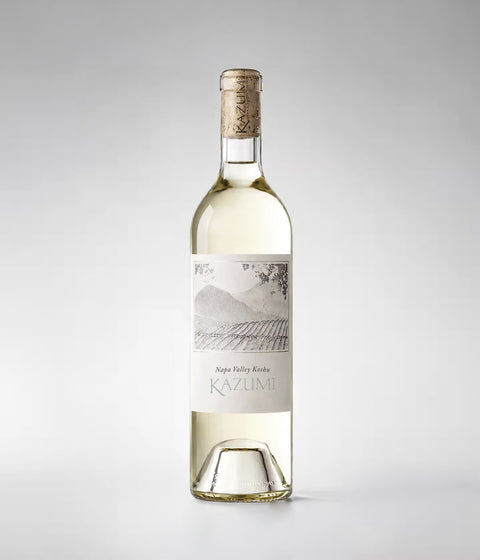
Japanese wine already has a fascinating story — centuries of history, unique indigenous varieties like Koshu, and a quiet determination to make world-class wine in one of the most challenging climates on earth. The wines of Grace Wine and Kazumi prove what is already possible. Maeve feels like the next chapter.
I will be following it closely — the research, the producers, the wines, and whatever comes next. If this story fascinates you the way it fascinates me, you are in the right place.
Quick Reference: Maeve (メイヴ) at a Glance
| Category | Details |
|---|---|
| Variety Name | Maeve (メイヴ) |
| Type | Red wine grape |
| Origin | Fujisawa City, Kanagawa Prefecture, Japan |
| Year Discovered | 2019 |
| DNA Testing | Japan's National Research Institute of Brewing (酒類総合研究所) — no match found in any database |
| Genome Analysis | Okinawa Institute of Science and Technology (OIST) — confirmed as a completely new variety |
| Ongoing Research | Okayama University Graduate School |
| Genetic Profile | Reported parentage: American rootstock lineage (Riparia Gloire) × European Vitis vinifera (Sauvignon family) |
| Sugar Level | Up to 30 Brix in cultivation trials |
| Climate Range | Kitami, Hokkaido (−30°C / −22°F) to Nakijin, Okinawa (subtropical) |
| Disease Resistance | High — can be grown with minimal pesticide |
| Wine Styles | Sparkling, rosé, light red, full-bodied red, dessert wine (depending on harvest timing) |
| Urban Cultivation | Yes — grows well in containers and rooftop planters |
| Commercial Availability | Extremely limited — still largely experimental |
| Nickname | 奇跡のブドウ (kiseki no budou) — "miracle grape" |
| Name Origin | Named after the granddaughter of the original grower; Maeve is an Irish name often translated as "she who intoxicates" |
| Key Producer | MaeVino LLC (メイヴィノ合同会社), Tokyo |
| Related Product | MAEVE'S LEAF craft gin by FUJISAWA GIN (announced February 2, 2026) |
| Official Website | maevino.com |
Maeve (メイヴ) — Frequently Asked Questions
Can I buy Maeve wine?
Related products


Subscribe to the Japanese Wine Club
Sign up for free to the Japanese Wine Club to get advice, exclusive articles, tips, and special offers.

About the author

Subscribe to the Japanese Wine Club
Sign up for free to the Japanese Wine Club to get advice, exclusive articles, tips, and special offers.
Comments (0)
There are no comments for this article. Be the first one to leave a message!